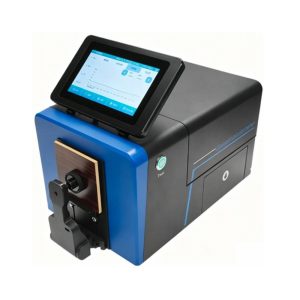
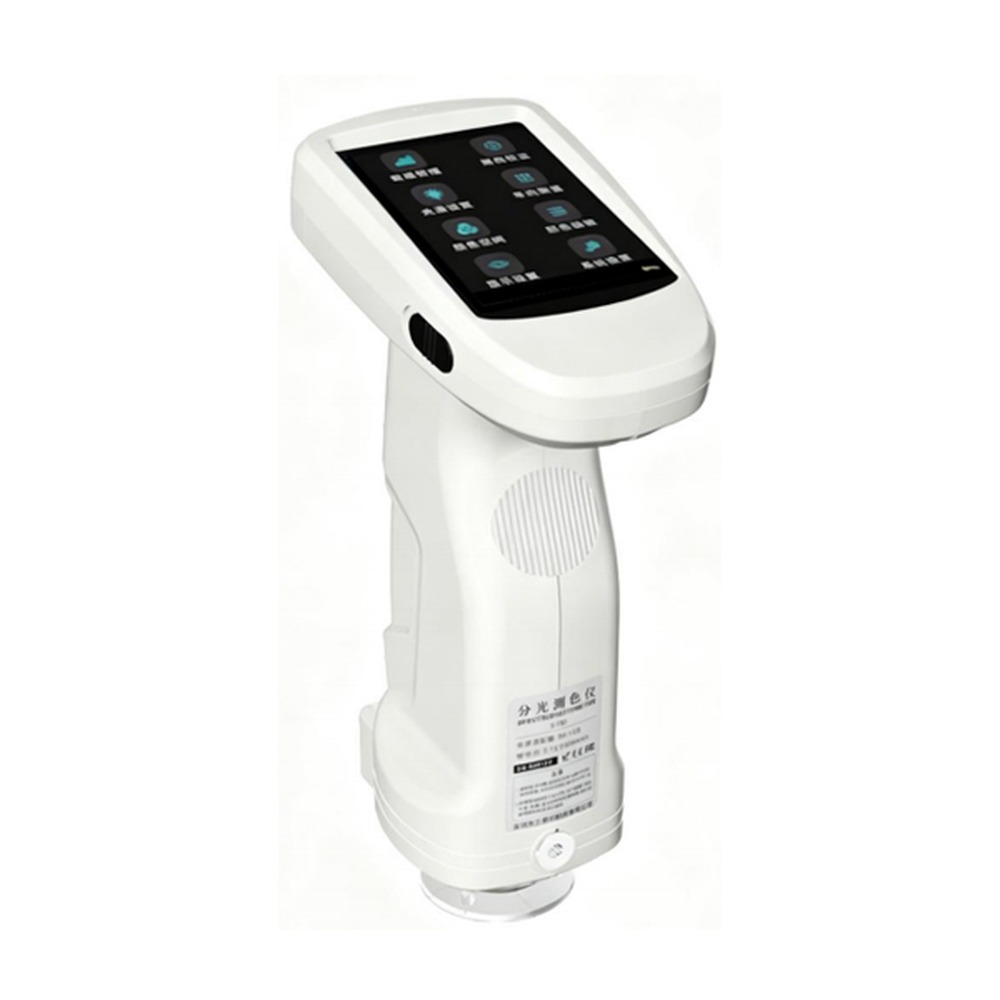
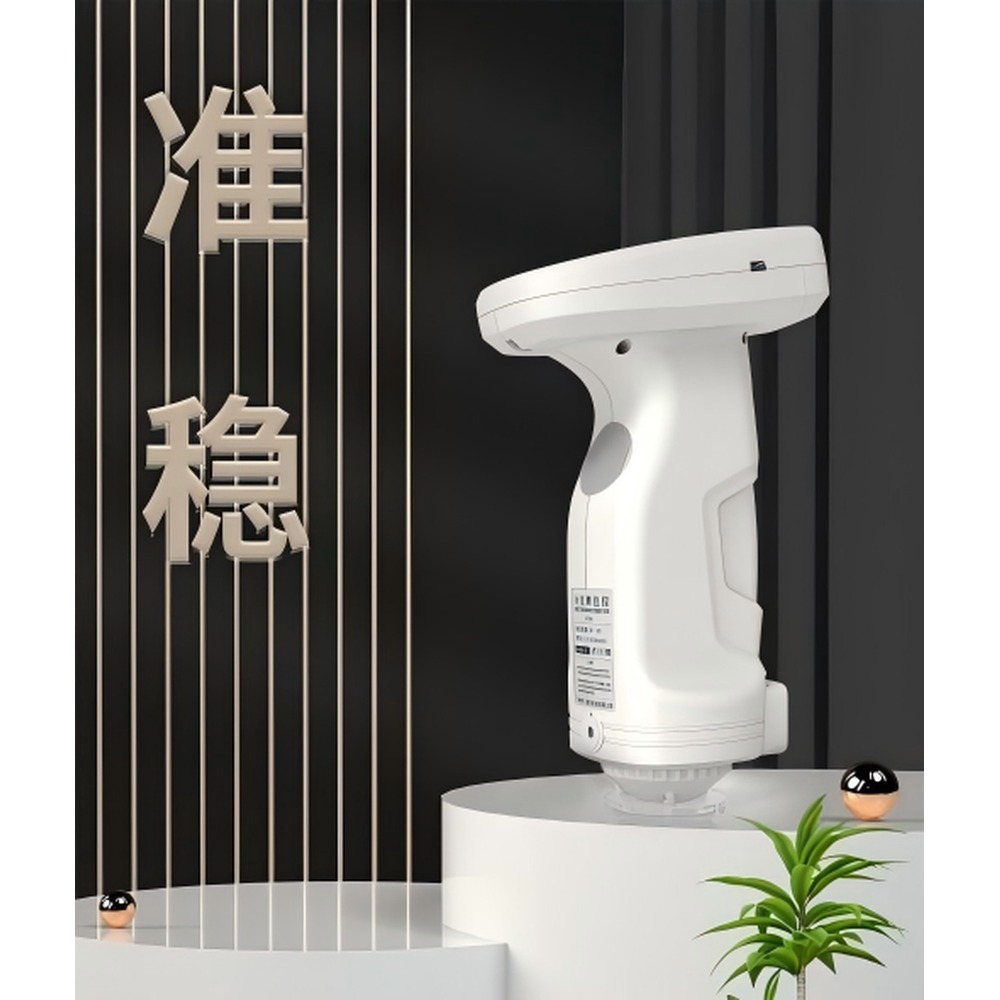
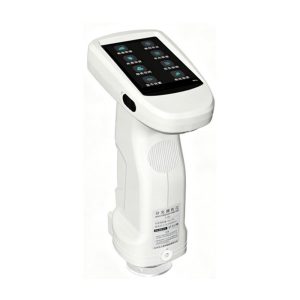
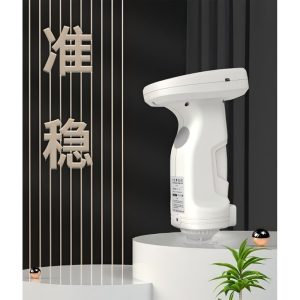
High-precision spectrophotometer for laboratory-grade colour management.
- Repeatability ΔE*ab ≤ 0.15
- Dual 26-array silicon photodiode sensor
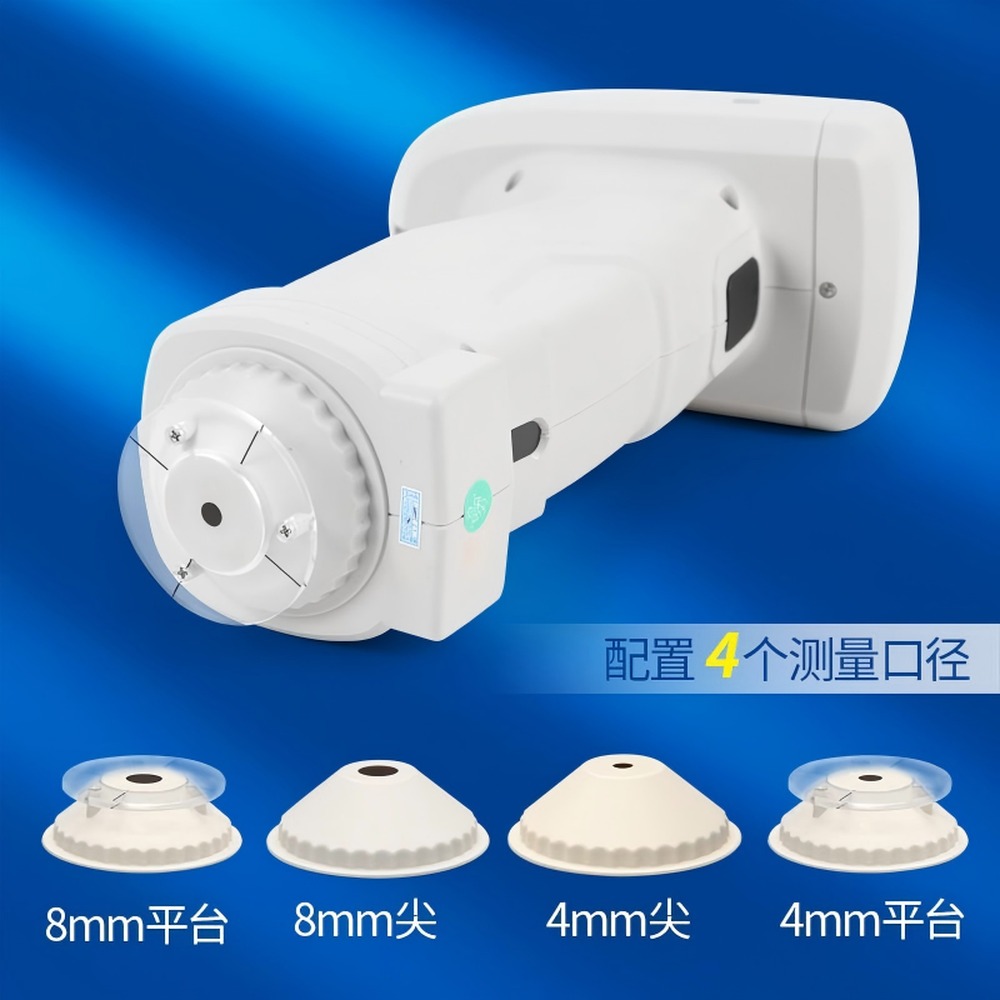
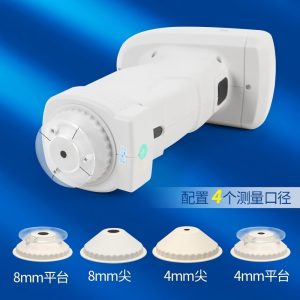
- Four measuring apertures: 8 mm and 4 mm
- Bluetooth 5.0 wireless connection
The SC-T60 carries forward our core spectroscopic technology, balancing laboratory-grade accuracy with convenient operation — high accuracy, high performance and strong value in one instrument.
It uses a built-in photodiode array (dual 26 groups) sensor and an imported white tile. Repeatability is held within ΔE*ab 0.025 and inter-instrument agreement within ΔE*ab 0.15, so data is accurate enough for precise colour analysis and transfer in the laboratory. Four measuring apertures widen the range of samples it can handle, for accurate colour measurement and quality control in plastics and electronics, paint and ink, textile dyeing and printing, printing, and ceramics. Fluorescent samples can also be measured.
Features
- Large-area photodiode array (dual 26 groups) sensor — a larger sensing area that does not saturate under strong light, with higher sensitivity to weak light and a wider spectral response, ensuring speed, accuracy, stability and consistency.
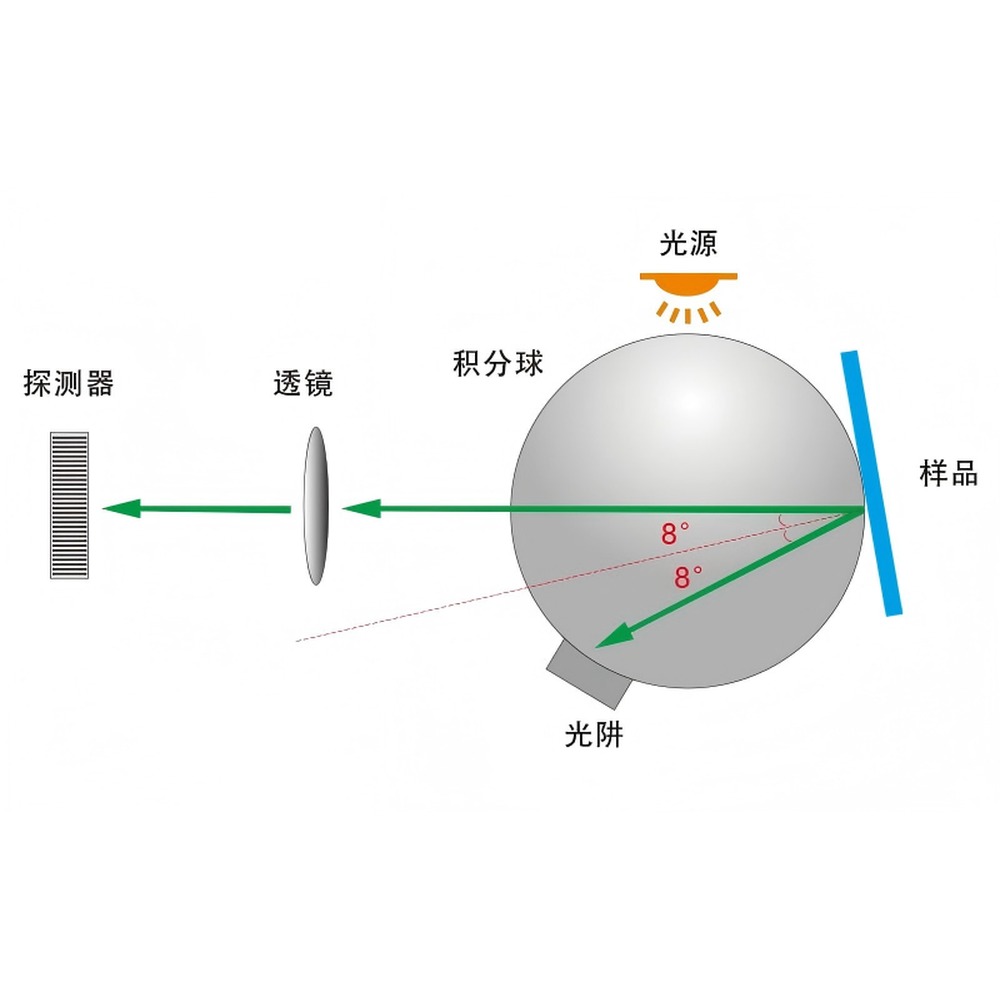
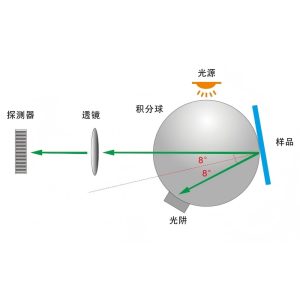
- Internationally accepted D/8 geometry, SCI/SCE compatible, with simultaneous SCI + SCE measurement — the widely applicable D/8 illumination and viewing condition combined with SCI/SCE synthesis supports fast simultaneous measurement in about 1.5 seconds.
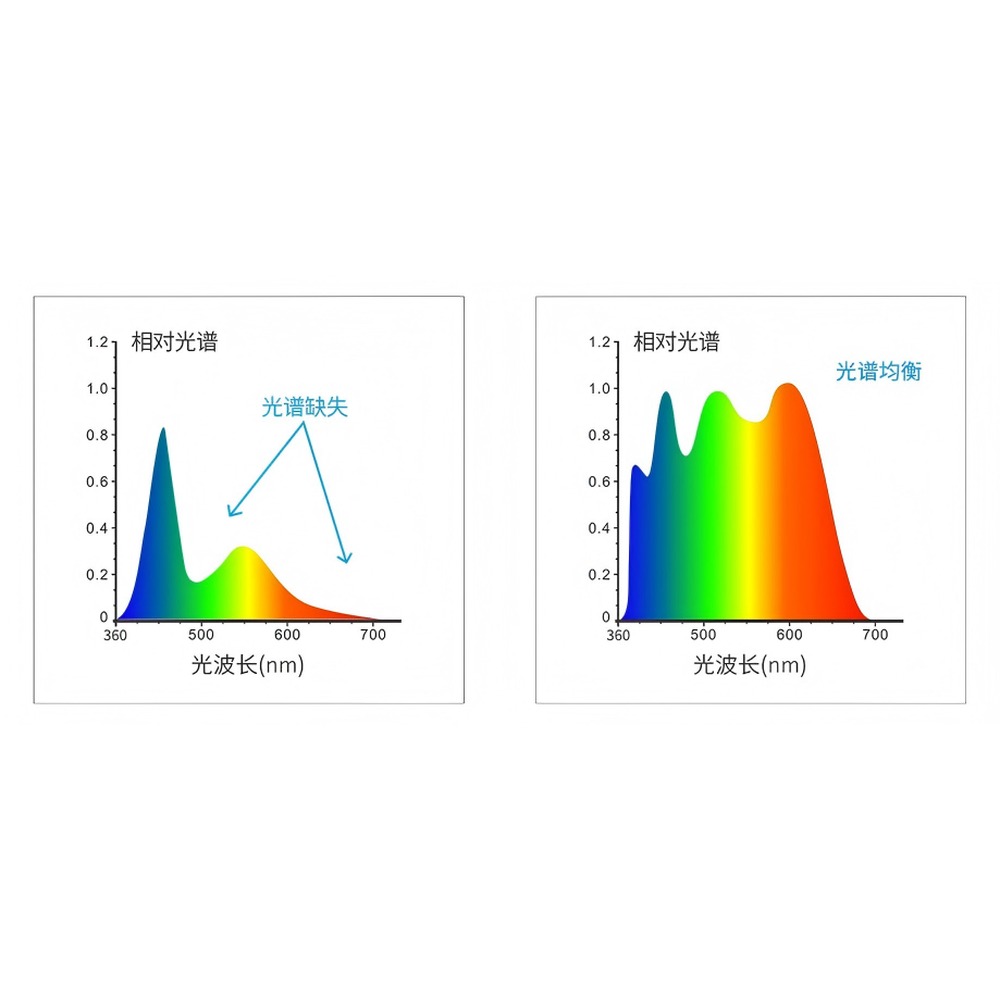
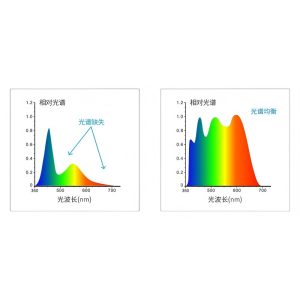
- Combined full-spectrum LED and UV light source — a 360–700 nm full-spectrum LED gives sufficient spectral distribution across the visible range and avoids gaps at specific wavelengths, so fluorescent samples are handled easily.
- Four measuring apertures to cover more sample types — supplied with 8 mm platform, 8 mm tip, 4 mm platform and 4 mm tip apertures as standard, covering most special sample requirements.
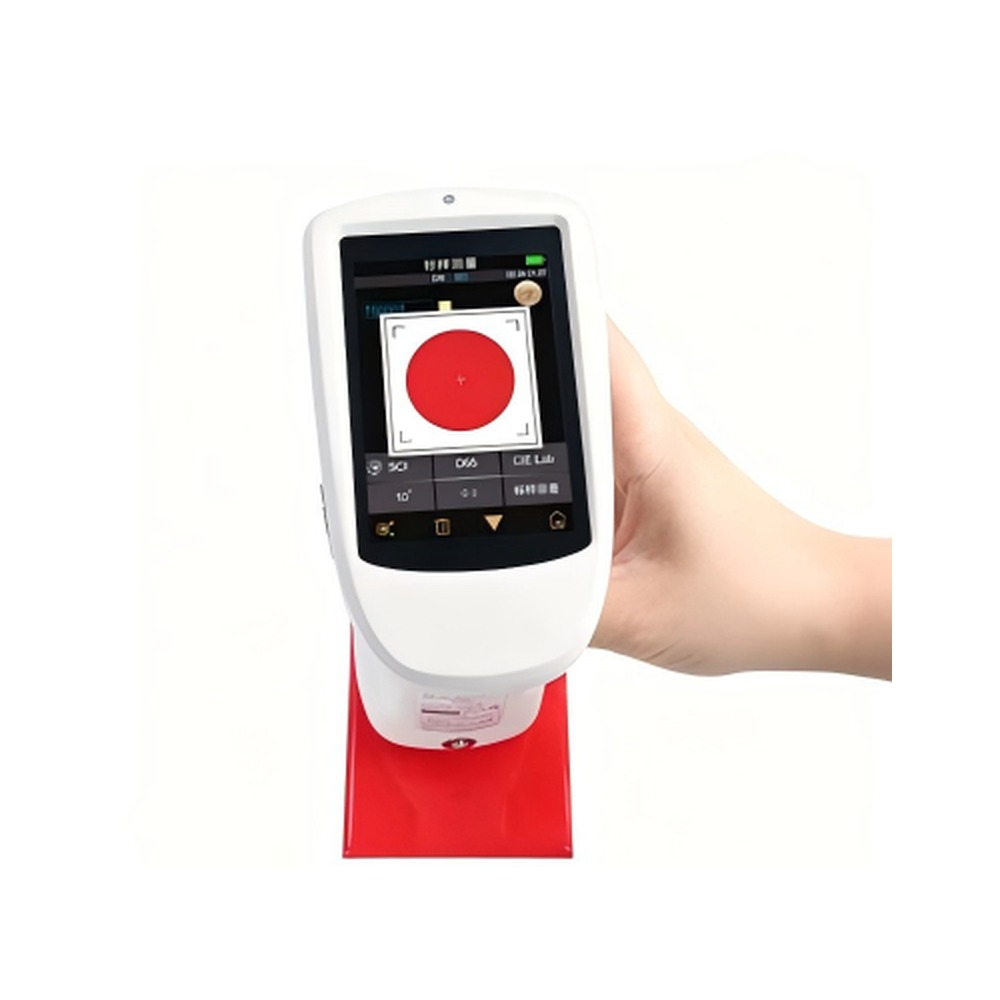
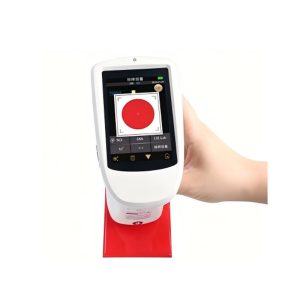
- Camera viewfinder positioning — a built-in camera shows the measured area in real time, so you can confirm the target centre accurately, improving both efficiency and accuracy.
- Non-contact automatic calibration with a professional imported white tile — more wear resistant, dirt resistant and stable.
- A rest base keeps the white tile clean — the instrument sits safely between measurements, keeping the tile free of dust and marks.
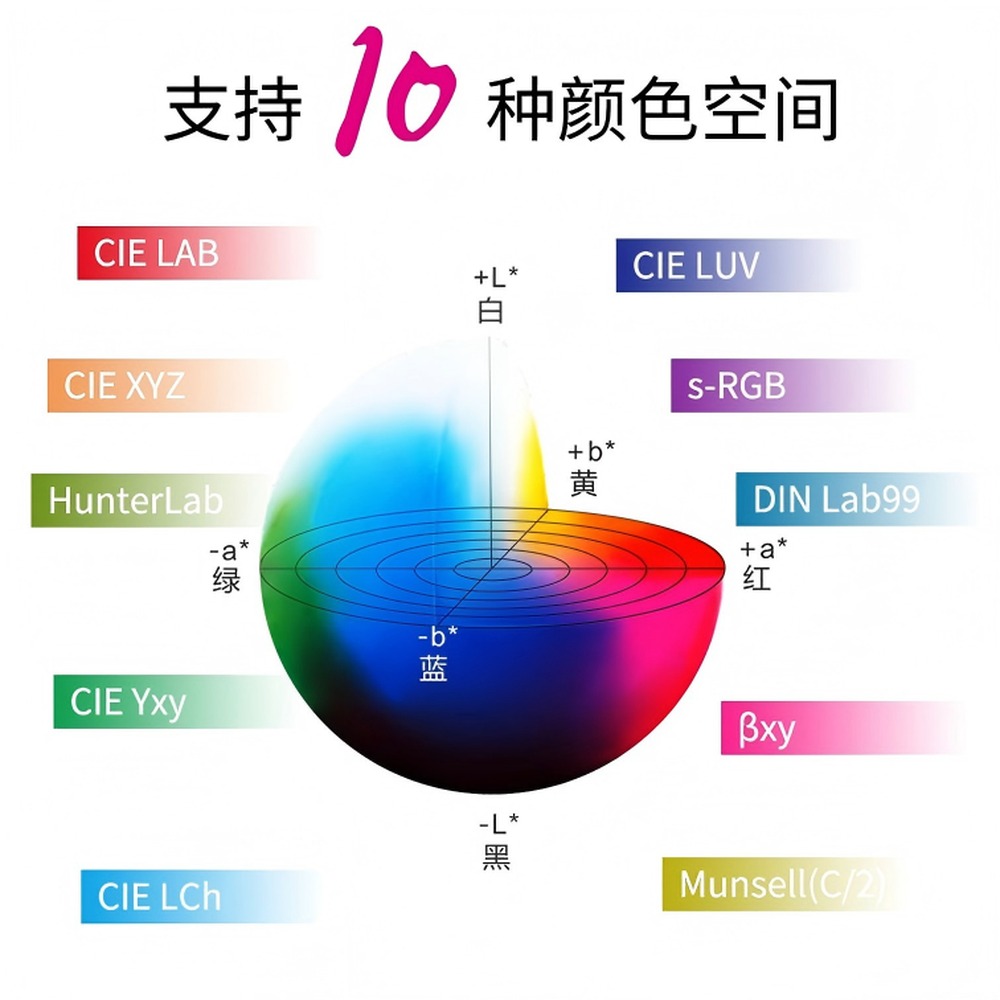
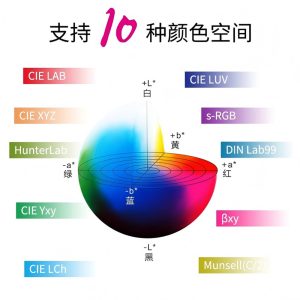
- Ten colour spaces and 41 observation light sources — CIE LAB, XYZ, Yxy, LCh, CIE LUV, s-RGB, HunterLab, DIN Lab99 and Munsell (C/2), plus D65, A, C, D50, D55, D75, F1, F2 (CWF) and others, 41 in total (some via PC software or app), covering special measurement requirements.
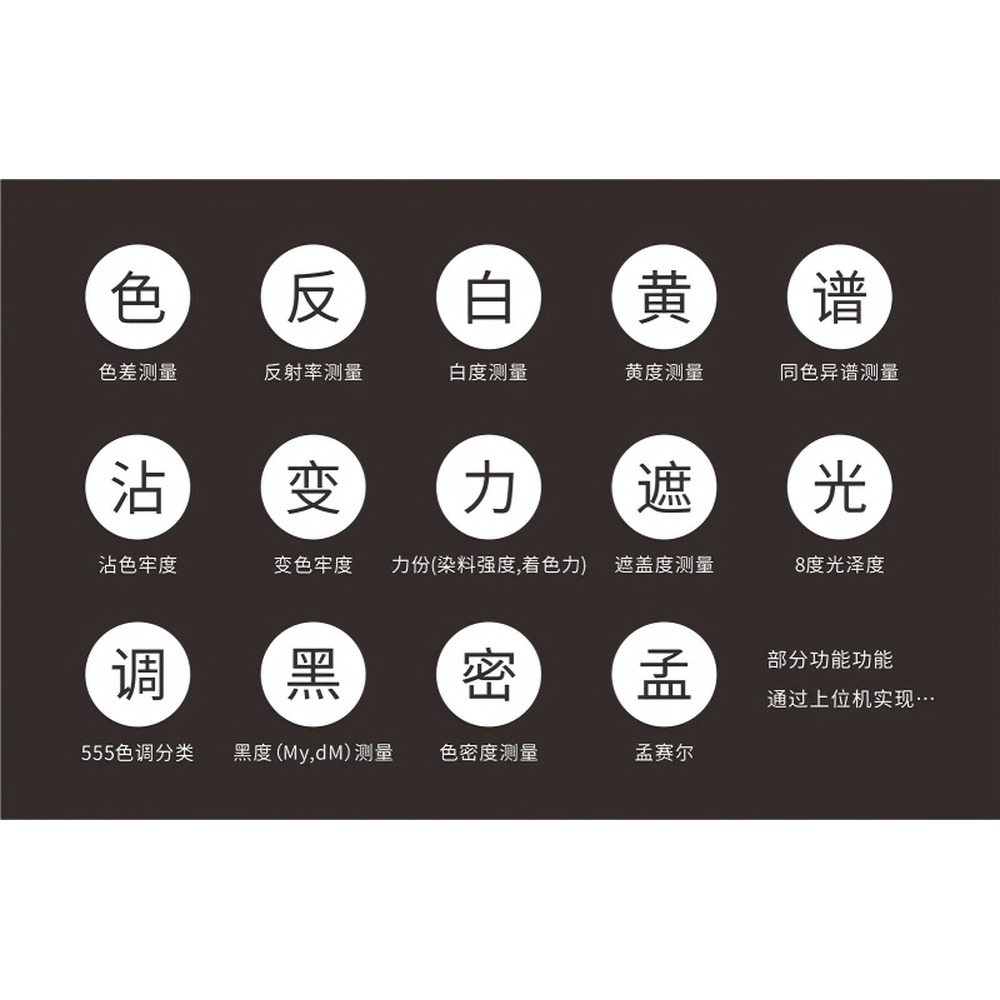
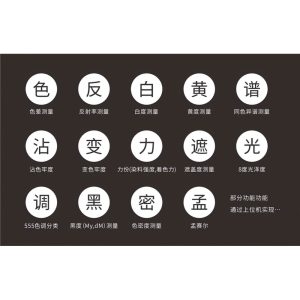
- Rich chromaticity indices — besides common colour metrics, it offers spectral reflectance, WI, YI, metamerism index Mt, staining fastness, colour fastness, dye strength, opacity, 8 degree gloss, 555 hue classification, blackness (My, dM), CMYK (A, T, E, M), Tint, colour density and Munsell (some functions via PC software).
- Excellent inter-instrument agreement and repeatability keep data consistent across multiple devices, suitable for colour matching and precise colour transfer.
- Supports HarmonyOS, Android, iOS, WeChat mini program and Windows.
Technical Parameters
- Geometry: D/8 (diffuse illumination, 8 degree viewing), SCI/SCE measurement, including UV / excluding UV
- Standards: CIE No.15, GB/T 3978, GB 2893, GB/T 18833, ISO7724-1, ASTM E1164, DIN5033 Teil7
- Four measuring apertures for precise laboratory colour analysis and transfer; for accurate colour measurement and quality control in plastics and electronics, paint and ink, textile dyeing and printing, printing and ceramics; suitable for fluorescent samples
| Type | Configuration |
|---|---|
| Model | SC-T60 (core technology) |
| Illumination Method | D/8 (diffuse illumination, 8 degree viewing), SCI/SCE measurement, including/excluding UV. Standards: CIE No.15, GB/T 3978, GB 2893, GB/T 18833, ISO7724-1, ASTM E1164, DIN5033 Teil7 |
| Features | Four measuring apertures for precise laboratory colour analysis and transfer; accurate colour measurement and quality control in plastics and electronics, paint and ink, textile dyeing and printing, printing and ceramics; suitable for fluorescent samples |
| Integrating Sphere Size | Φ40mm |
| Illumination Source | Combined full-spectrum LED and UV light source |
| Spectral Method | Plane grating spectroscopy |
| Sensor | Large-area silicon photodiode array (dual 26 groups) |
| Measuring Wavelength Range | 360~700nm |
| Wavelength Interval | 10nm |
| Reflectance Measuring Range | 0~200% |
| Measuring Aperture | Four apertures: MAV 8 mm / 10 mm; SAV 4 mm / 5 mm |
| Measurement Mode | Simultaneous SCI/SCE measurement |
| Colour Space | CIE LAB,XYZ,Yxy,LCh,CIE LUV,s-RGB,HunterLab,βxy,DIN Lab99, Munsell(C/2) |
| Colour Difference Formula | ΔE*ab,ΔE*uv,ΔE*94,ΔE*cmc(2:1),ΔE*cmc(1:1),ΔE*00, DINΔE99,ΔE(Hunter) |
| Other Chromaticity Indices | Spectral reflectance, WI (ASTM E313, CIE/ISO, AATCC, Hunter, Taube Berger Stensby), YI (ASTM D1925, ASTM E313), metamerism index Mt, staining fastness, colour fastness, dye strength, opacity, 8 degree gloss, 555 hue classification, blackness (My, dM), CMYK (A, T, E, M), Tint, colour density, Munsell (some functions via PC software) |
| Observer Angle | 2°/10° |
| Observer Illuminants | D65, A, C, D50, D55, D75, F1, F2 (CWF), F3, F4, F5, F6, F7 (DLF), F8, F9, F10 (TPL5), F11 (TL84), F12 (TL83/U30), B, U35, NBF, ID50, ID65, LED-B1 to B5, LED-BH1, LED-RGB1, LED-V1, LED-V2, LED-C2, LED-C3, LED-C5, plus custom sources (41 in total, some via PC software or app) |
| Display | Spectral graph/data, sample chromaticity, colour difference value/graph, pass/fail result, colour simulation, colour deviation |
| Measuring Time | Approx. 1.5 s |
| Repeatability | Chromaticity: MAV/SCI, ΔE*ab within 0.025 (after warm-up calibration, average of 30 measurements on the white tile at 5 s intervals). Spectral reflectance: MAV/SCI,standard deviation within 0.08% (within 0.18% from 400 nm to 700 nm) |
| Inter-instrument Agreement | MAV/SCI, ΔE*ab within 0.15 (average of BCRA Series II 12 tiles) |
| Display Resolution | 0.01 |
| Measuring Mode | Single measurement, average measurement (2-99 times) |
| Positioning Method | Camera viewfinder positioning, stabilising plate positioning |
| Dimensions | L x W x H = 129 x 76 x 217 mm |
| Type | Configuration |
|---|---|
| Weight | Approx. 600 g |
| Battery Capacity | Lithium battery, 3.7 V, 5000 mAh, 8800 measurements within 8 hours |
| Light Source Life | Over 1.5 million measurements in 10 years |
| Display | 3.5 inch TFT true colour capacitive touch screen |
| Interface | USB, Bluetooth 5.0 |
| Stored Data | 1000 standards, 30,000 samples (one record can include both SCI and SCE), plus mass storage in app/PC |
| Software Support | Android, iOS, Windows, WeChat mini program, HarmonyOS |
| Language | Simplified Chinese, English, Traditional Chinese, Russian |
| Operating Temperature Range | 0-40 °C, 0-85% RH (non-condensing), altitude below 2000 m |
| Storage Temperature Range | -20 to 50 °C, 0-85% RH (non-condensing) |
| Standard Accessories | Power adapter, data cable, manual, quality management software (download from website), black and white calibration box, protective cover, wrist strap, 8 mm platform aperture, 8 mm tip aperture, 4 mm platform aperture, 4 mm tip aperture |
| Optional Accessories | Mini printer, powder test box |
| Note: | Specifications are for reference only; the product as supplied prevails |
| ΔE*ab ≤ 0.15, outstanding repeatability | Dual 26-array silicon sensor |
|---|---|
| Four measuring apertures, 8 mm and 4 mm | Bluetooth 5.0 wireless connection |