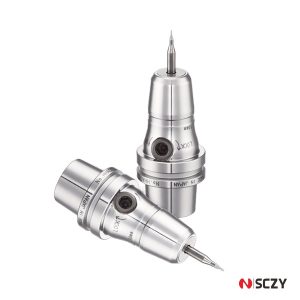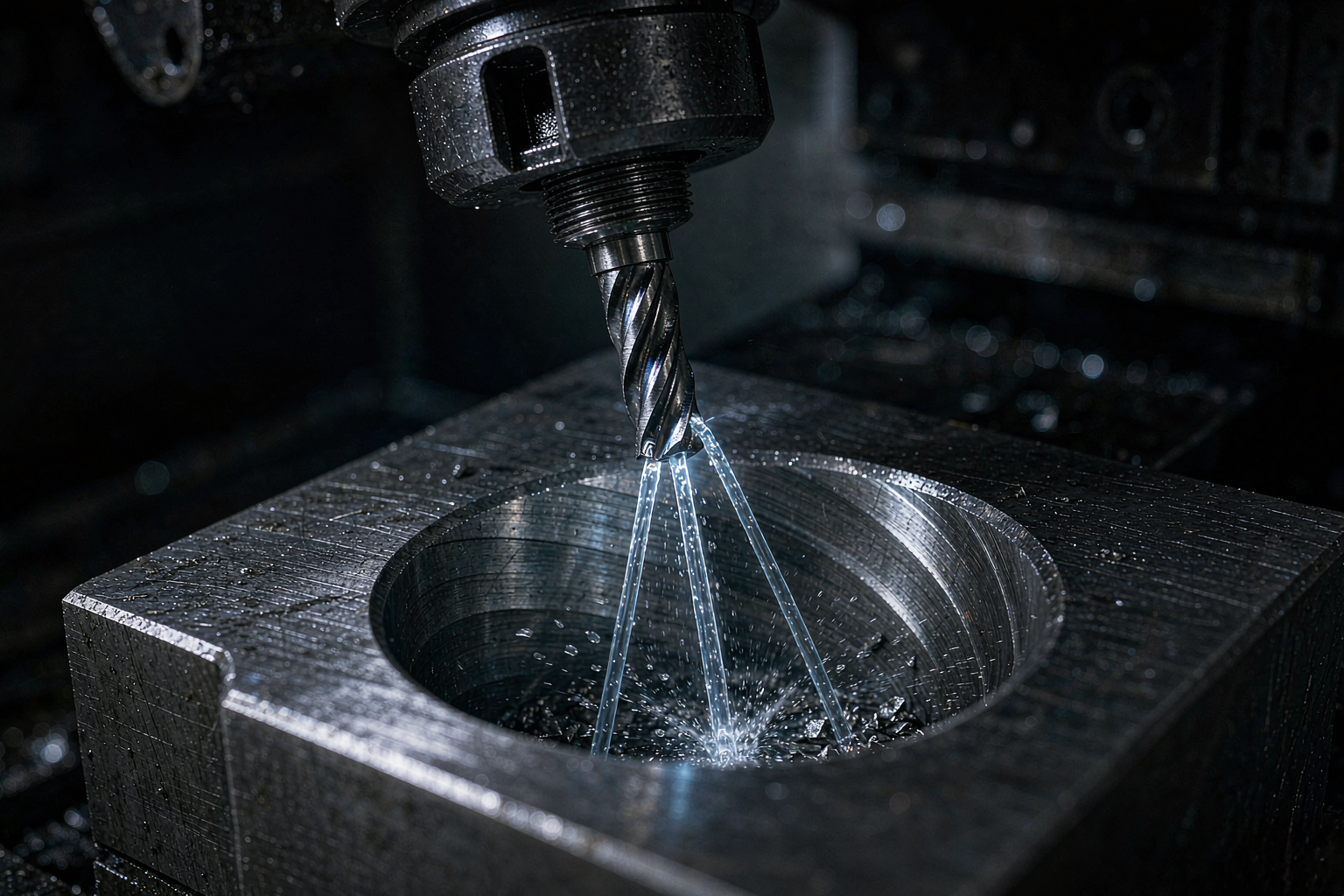
A coolant through tool holder does one thing that changes everything downstream of it: it moves the coolant from the outside of the cut to the inside of it. Flood coolant from two nozzles will cool a face mill all day long, but put a 10 mm drill 60 mm deep into 4140 and almost none of that flow reaches the cutting edge. The fluid hits the workpiece surface, deflects off the chip pile, and the tip keeps working dry. A coolant through tool holder routes the fluid down the center of the spindle, through the holder body, past the collet or sleeve, into the tool shank, and out at the drill point — where the heat and the chips actually are.
In practice this is a pressure-sealing problem, and it is the part buyers underestimate most. A holder that leaks at 15 bar is not slightly worse — it quietly washes the spindle taper with coolant and destroys a bearing pack six months later. This guide covers what changes at the cutting edge, the four sealing points in the stack, how pressure classes map to hardware, and how to specify and install a coolant through tool holder so it stays sealed.
What Changes When the Coolant Travels Inside the Tool
The chip problem
In a hole deeper than about three diameters, chips must travel back up a narrow annulus, and flood coolant presses them against the wall instead of lifting them out. Through-tool coolant arrives at the bottom and pushes chips up the flutes with a directed jet, which is why pecking cycles can often be shortened or dropped altogether.
The heat problem
Internal coolant hits the flank and chisel edge directly and leaves by the same path as the chip. On stainless and titanium it also keeps the cut under the work-hardening threshold far more consistently than a stream that only reaches the top of the hole. Tool life on deep drilling often doubles after a shop moves from flood to internal coolant — not because the coolant is better, but because it finally arrives.
The Four Sealing Points That Decide Whether the Stack Holds Pressure
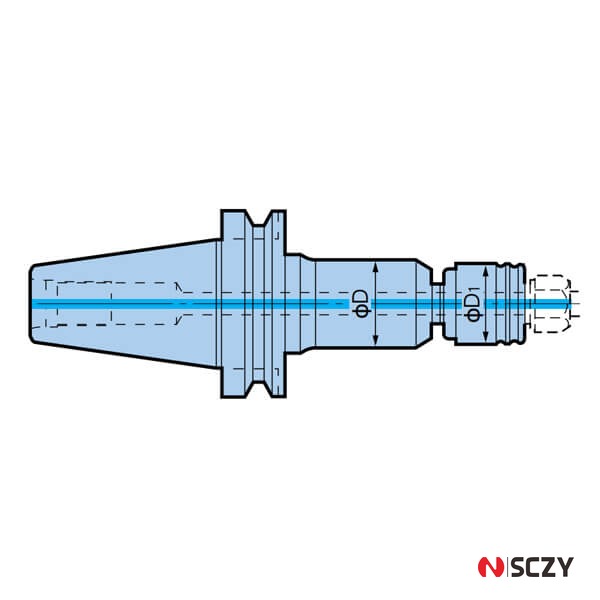
A coolant through tool holder is one component in a chain that runs from the pump to the drill point. Pressure escapes at the weakest joint, and there are four of them.
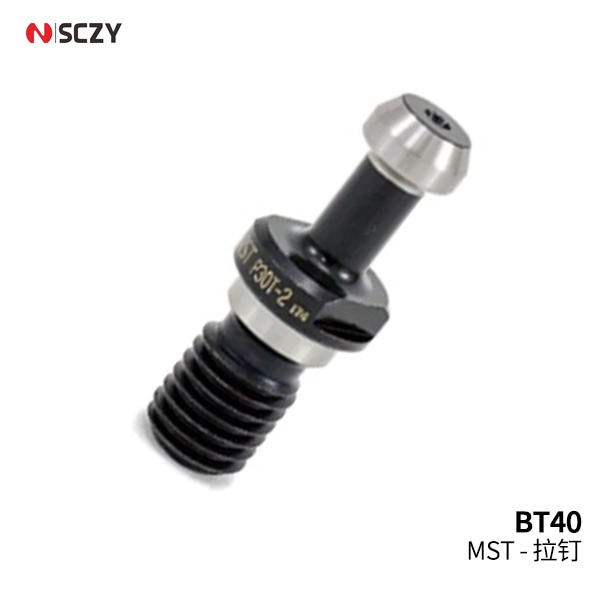
1. The pull stud and the coolant tube
At the top of the stack the drawbar grips the pull stud while coolant passes through its center. This is where most leaks begin. The O-ring on the pull stud seats against the coolant tube in the spindle, and it is a wear item, not a permanent seal. Pull studs sold for coolant-through use have a through-bore and a specified O-ring groove; a solid stud with a drilled hole and no groove will seep at anything above low pressure. When a shop reports coolant running out of the spindle nose, the first part to inspect is this O-ring, not the holder.
2. The holder body channel
The body must carry fluid from the pull stud bore to the tool end without intersecting anything it should not. Good holders use a dedicated internal channel; cheaper ones drill a cross-hole that breaks into the clamping screw thread, which becomes a leak path under pressure and a stress riser over time. On side-lock holders, check that the cross-hole does not daylight into the set-screw bore.
3. The collet nut and the collet
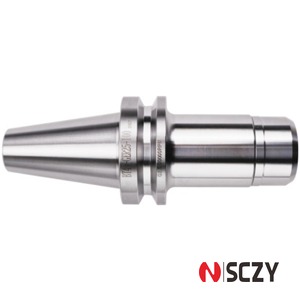
ER collet systems leak by design: the collet has slots, and fluid follows them. Sealing an ER holder means a sealed collet with an integral O-ring in the bore plus a nut whose face seals against the collet flange. That works up to moderate pressure with small tools, but the seal is a rubber ring living in a chip-filled environment. Above roughly 50–70 bar on a regular basis, an ER system is the wrong architecture, however good the nut is.
4. The tool shank
The last joint is between the collet or sleeve and the tool shank. A coolant-hole drill has its own passage and a cross-hole at the shank; the holder simply has to deliver fluid to that cross-hole without leaking around the circumference. Shank tolerance, cleanliness and clamping force all matter — a shank that slips slightly under load will leak at the same moment it starts to cut badly.
Pressure Classes and the Hardware Each One Demands
The most useful specification when comparing coolant through tool holders is the pressure the sealing system is designed for, not the pressure the pump can produce.
| Pressure band | Typical hardware | Sealing requirement | Tool shank | Best fit | First thing that fails |
|---|---|---|---|---|---|
| Flood only (3–8 bar) | External nozzles, standard holder | None | Plain shank | Face and shoulder milling, open pockets | Not applicable |
| Low through (10–20 bar) | Coolant-through pull stud, standard collet | Pull stud O-ring, body channel | Shank with coolant hole | General drilling to 3×D, tapping | Pull stud O-ring |
| Medium (20–50 bar) | Sealed collet nut or hydraulic holder, coolant-through pull stud | All four joints sealed | Coolant-hole shank with cross-hole | Deep drilling 5–10×D, small diameter | Sealed collet O-ring |
| High (50–100 bar) | Hydraulic or shrink-fit holder, high-pressure pull stud and tube | Metal-to-metal or engineered elastomer seals | DIN 6535 HB/HE with coolant holes | Deep small-hole drilling, stainless and titanium | Spindle coolant tube wear |
| Ultra (100–200+ bar) | Dedicated high-pressure system, gundrill holders | Verified leak test, filtration to 10–25 µm | Dedicated coolant-fed tooling | Gundrilling, oil-hole drills, mold cooling channels | Filtration, then seal erosion |
Pressure and flow are separate requirements: a 1 mm drill needs pressure with almost no flow, a 20 mm drill needs flow at moderate pressure. Sizing a pump by bar alone is a common mistake, and every band above low pressure assumes a coolant tube rated for it — the holder cannot seal what the machine cannot deliver.
Matching the Holder Style to the Job
ER collet chucks with sealed nuts
Flexible and inexpensive, and the right answer for mixed small-tool work up to moderate pressure. Match the sealed collet to the actual tool diameter, not the nominal collet size: a 5.5 mm tool in a 6 mm seal will leak past the ring.
Side-lock and Weldon holders
Strong in torque, awkward to seal. The set screw bore and Weldon flat both create leak paths, so side-lock holders are usually limited to low-pressure through-coolant or external coolant. For heavy roughing with coolant, pair a milling chuck or hydraulic holder instead.
Hydraulic expansion and shrink-fit holders
The hydraulic oil chamber and thin-walled sleeve seal naturally and suit 30–70 bar; the trade-offs are torque capacity and keeping the sleeve surface clean, since a scored sleeve leaks as well as it grips badly. Shrink-fit seals best of all, because the interference fit closes the annulus completely — it is the standard route for high-pressure small-diameter drilling, provided the tool shank carries the coolant passage.
Specifying the Tool Shank Correctly
DIN 6535 describes shank forms — HA plain, HB with a Weldon flat, HE with an inclined flat — and most of those forms exist in both solid and coolant-hole versions. The form number alone does not tell you whether the shank has a coolant passage; the coolant variant has to be called out explicitly on the purchase order, with the hole diameter and whether the cross-hole exits in the flat. Ordering “HB shank” and receiving a solid one is a common reason a new setup will not hold pressure on the first try. On small drills, also check the internal hole against the required flow: a 0.8 mm hole in a 6 mm drill passes pressure but very little volume, and the gauge reads full while the tip runs hot.
Installation Checks That Prevent Most Leaks
Sealing is mostly assembly discipline. Four checks cover the majority of failures:
- Torque the pull stud to the holder manufacturer’s specification with a calibrated wrench, and replace the O-ring whenever the stud has been removed.
- Leak test at working pressure before the first cut, using a plugged test tool with the assembly outside the spindle. Any weep at the flange face is a pull stud or tube problem.
- Clean the taper and collet bore at every change. Coolant varnish and fine chips both reduce grip and open leak paths.
- Maintain filtration and concentration. Dirty coolant erodes elastomer seals; lean coolant attacks them chemically. Both appear as a leak with no mechanical change.
Failure Modes and What the Symptom Tells You
Coolant at the flange face points to the pull stud O-ring or a worn coolant tube. Coolant spraying out of the collet nut slots means the collet is unsealed or the seal ring is damaged. Pressure that holds at idle but collapses under cut usually means the shank cross-hole is misaligned or partly blocked. Coolant inside the spindle taper indicates a body leak or a cracked holder and needs the machine inspected before further running: coolant in a spindle is a bearing failure on a delay timer.
Cost, Payback and a Simple Decision Rule
Coolant-through hardware costs more per holder, and the pump, filtration and pull studs add to the bill. The payback comes from tool life on deep holes, cycle time from reduced pecking, and scrap from hole quality. Deep stainless work usually pays back in weeks; shallow spotting and face milling never do.
A workable rule: if the operation goes deeper than three diameters, uses a tool under 10 mm, or works in a material where heat drives the failure mode, specify a coolant through tool holder with a sealed stack rated above the pressure you intend to run. If none of those apply, flood coolant remains the cheaper and adequate answer.
Getting the Stack Right the First Time
Most coolant through tool holder problems are mismatches rather than design faults: a high-pressure pump feeding a standard collet nut, a sealed collet used with the wrong tool diameter, a solid shank ordered by mistake, an O-ring that was never replaced. Match the four sealing points to the pressure band, specify the shank correctly, and test before the first cut, and the system does what it promises — coolant at the cutting edge, every time.
SCZY supplies coolant through tool holders, sealed collet systems, hydraulic and shrink-fit holders, and matching pull studs, with pressure ratings and sealing hardware specified per application. If you are unsure which configuration fits your spindle and pressure band, send us your machine model and drilling data and we will recommend a stack that holds.
Talk to the SCZY team about your coolant-through setup — tell us your spindle interface, coolant pressure and the deepest hole you run, and we will specify the holder, collet and pull stud together.