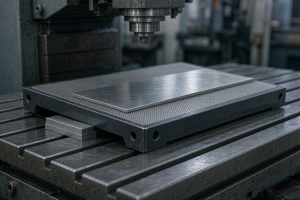
Walk into a die-and-mold shop or a heavy equipment job shop and you will find them: rows of thick, heavy tapers in reinforced racks, each several times the mass of the holders on the small VMCs across the aisle. Those are BT50 tool holders, the big-brother interface of the 7:24 taper family that includes BT30 and BT40. Choosing BT50 is not about upgrading a number on a spec sheet; it is a decision about how much metal you intend to remove per minute, how long your edges survive that removal, and whether your spindle and automatic tool changer can cope with a 10-kilogram holder. This guide covers the physics that justify BT50, the numbers that matter next to BT40, the jobs where it earns its keep, and the specifying details that separate a good order from an expensive mistake.
Why BT50 Exists: The Physics of a Bigger Taper
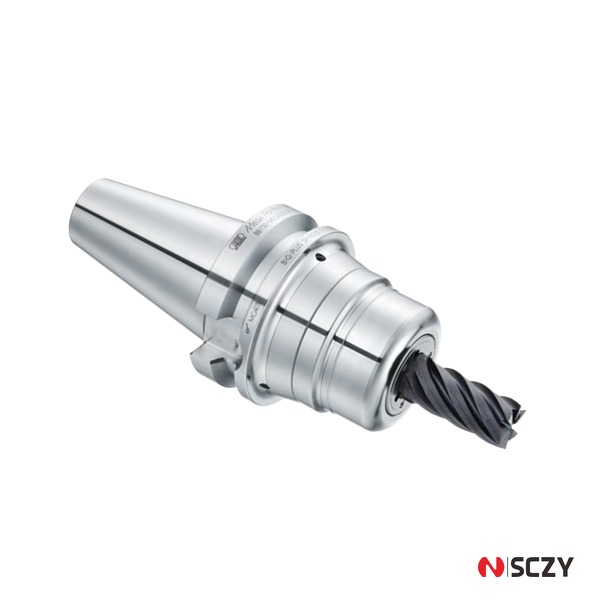
BT50 uses the same 7:24 self-holding taper angle as every holder in the BT family. What changes is scale: the taper’s large end grows from 44.45 mm on BT40 to 69.85 mm on BT50, and the flange grows from 63 mm to 100 mm. Those two dimensions drive nearly everything else about the interface.
Bending stiffness scales with the fourth power
When a milling cutter takes a heavy cut, the holder behaves like a cantilever beam: deflection at the cutting edge rises with the cube of projection length and inversely with the section’s second moment of area, which scales with the fourth power of diameter. On paper, the 69.85 mm large end gives roughly six times the section stiffness of BT40; real holders are hollow and truncated, so the practical gain is smaller — but a well-made BT50 shell mill arbor still delivers three to four times the bending stiffness of an equivalent BT40 holder. In a heavy face milling or boring cut, that difference shows up directly as less chatter, tighter dimensional hold, and longer edge life, because a stable cut spreads load evenly across all inserts instead of letting the most loaded one chip first.
Torque transmission rides on clamping force times radius
A 7:24 taper transmits torque by friction across the cone, backed up by the drive keys on the flange. Both contributions scale with the taper: the cone is wider, the flange radius is larger, and the drawbar squeezes far harder. For deep, high-torque cuts — 160 to 250 mm face mills in a full-width slot, or 80 mm boring bars taking 8 mm of radial depth — BT40 holders can slip or fret even when the clamping is healthy. A BT50 holder under the same cut still has reserve.
Drawbar force is the other half of the story
Stiffness is useless if the taper pulls out. Typical drawbar force runs 8–12 kN on BT40 spindles and 15–30 kN on BT50 spindles, with the retention knob thread stepping up from M16 to M24 to carry the load. That combination — bigger clamp force acting on a bigger cone — is what lets BT50 survive interrupted cuts on castings and weldments, where impact loads exceed anything a small taper can resist. If your BT40 holders show fretting corrosion rings in the spindle bore, that is usually the interface telling you it is running at the edge of its torque envelope; the fix is a lighter cut or a bigger taper.
BT50 vs BT40 vs BT30: The Numbers That Matter
The table below collects the specification points a buyer should compare before committing to an interface. Values are typical ranges for common production machines, not absolute limits — always confirm against your machine tool builder’s data.
| Specification | BT30 | BT40 | BT50 |
|---|---|---|---|
| Taper large end diameter | 31.75 mm | 44.45 mm | 69.85 mm |
| Flange diameter | 46 mm | 63 mm | 100 mm |
| Retention knob (pull stud) thread | M12 | M16 | M24 |
| Typical drawbar force | 4–7 kN | 8–12 kN | 15–30 kN |
| Holder mass (shell mill arbor, approx.) | 1–1.5 kg | 3–5 kg | 8–12 kg |
| Typical spindle speed ceiling | 12,000–20,000 rpm | 10,000–15,000 rpm | 4,000–8,000 rpm |
| Face mill diameter handled comfortably | Ø50–80 mm | Ø80–125 mm | Ø160–250 mm |
| Typical spindle power | 3.7–7.5 kW | 7.5–18 kW | 22–45 kW |
| Where it belongs | Drilling and tapping centers, small VMCs | General production VMCs | Die/mold roughing, heavy fabrication, boring mills, gantry mills |
Two things the table does not show deserve equal attention. First, mass: a BT50 holder weighs two to three times its BT40 equivalent, hitting the tool changer’s per-pocket rating, the spindle bearings’ response to unbalance at speed, and spin-up time. Second, thermal behavior: a large steel mass in the spindle takes longer to reach thermal equilibrium, so jobs mixing heavy roughing and finish passes need a warm-up allowance that small-taper machines barely notice.
Where BT50 Tool Holders Earn Their Keep
Large-diameter face milling
This is the classic BT50 job. A Ø200 mm face mill with 12–16 inserts on a BT50 shell mill arbor sits comfortably within the interface’s torque and stiffness envelope, whereas the same cutter on BT40 lives at the edge of slip and chatter territory. If you routinely buy face mills above Ø160 mm, the machine you mount them on almost certainly has a BT50 spindle for exactly this reason.
Deep boring and long projection
Boring bar overhang multiplies deflection: double the projection and you roughly multiply deflection by eight. BT50’s larger cross-section gives a deep boring bar far more support than BT40 provides at equal projection, which is why large-diameter boring heads and extended-reach bars are almost universally specified in the big taper. For cylinder bores, pump housings or large bearing seats, the stiffness pays for itself in roundness.
Heavy roughing in die and mold work
Blocking down a P20 or hardened mold block with 8–10 mm depth of cut in a side-lock end mill holder or a power chuck is exactly the interrupted, high-torque regime BT50 was designed for. The same logic applies to structural fabrication: heavy plate, weldments and castings with hard skin reward the interface’s resistance to impact and pull-out. If your roughing cuts stall at tool life rather than machine capacity, moving the work to a BT50 spindle is often the cheaper upgrade.
Large-hole drilling and tapping
Drilling Ø40–60 mm holes in steel, or tapping M30 and larger, demands torque that small tapers struggle to deliver without slip. BT50 drilling and tapping holders keep the shank locked under stall-level torque spikes — the moment a tap binds, the difference between a held taper and a slipping one is a saved part versus a scrapped one.
Where BT50 Is the Wrong Answer
Small tools at speed
Put a Ø10 mm carbide end mill in a BT50 holder and you pay three penalties: the holder’s mass limits spindle speed to roughly 4,000–8,000 rpm on most machines, the long taper adds unnecessary projection for a small tool, and the ATC swallows a heavy holder every cycle for a job BT40 or BT30 does faster. Small-diameter finishing work belongs on the smaller tapers — the same reasoning we covered in our BT30 vs BT40 selection guide.
Machine and ATC compatibility limits
Before ordering a BT50 holder fleet, verify three machine-side facts: the magazine’s per-pocket load rating, the maximum tool diameter with adjacent pockets loaded, and the drawbar force of your own spindles — a worn spring pack that measures below spec will undermine exactly the heavy cuts you bought the big taper for.
The BT50 vs CAT50 mix-up
BT50 and CAT50 look almost identical but are not interchangeable: CAT50 (ANSI B5.50) uses a slightly different flange thickness and a 5/8-11 UNC pull stud, while BT50 (JIS B 6339) uses an M24 retention knob and the JIS flange. Mixing them up at the receiving dock is one of the most common — and most expensive — ordering errors in heavy machining. Confirm the taper standard on your spindle’s nameplate and buy holders and studs to match; our CAT40 vs BT40 explainer covers the same trap at the smaller size.
Specifying a BT50 Holder Order
Taper contact and gauge line
Insist on a blue-check taper contact report for sample holders: a healthy new holder shows a broad, continuous contact band toward the large end of the cone. Also confirm the gauge length matches what your CAM and presetting workflow expects — BT50’s gauge line tolerances matter more than on small tapers because the errors multiply across a deep, stiff cut.
Balance grade by actual speed
Most BT50 spindles top out near 6,000 rpm, where a conventional G6.3 balance is adequate. But if you run a high-speed BT50 machine above 8,000 rpm, specify G2.5 and expect the supplier to certify each holder — the mass you are spinning is much larger, so residual unbalance forces scale up with it. Our guide to G2.5 vs G6.3 balance grades explains the arithmetic.
Pull stud and coolant details
BT50 pull studs are M24 with a flange geometry defined by the machine builder — verify the part number against your spindle model rather than assuming one stud fits all BT50 machines. For high-pressure through-spindle coolant, order studs with sealed coolant passages and check the O-ring at every preventive maintenance interval.
Arbor styles you will actually order
A practical BT50 starter set covers four holder families: shell mill arbors for face milling, side-lock (Weldon) holders for end mills and drilling, collet holders for small-diameter secondary operations, and a boring head mount for large-hole work. Buy depth over breadth — five sizes of the holder you use daily beats one of each type you use twice a year.
Setup and Care on the Shop Floor
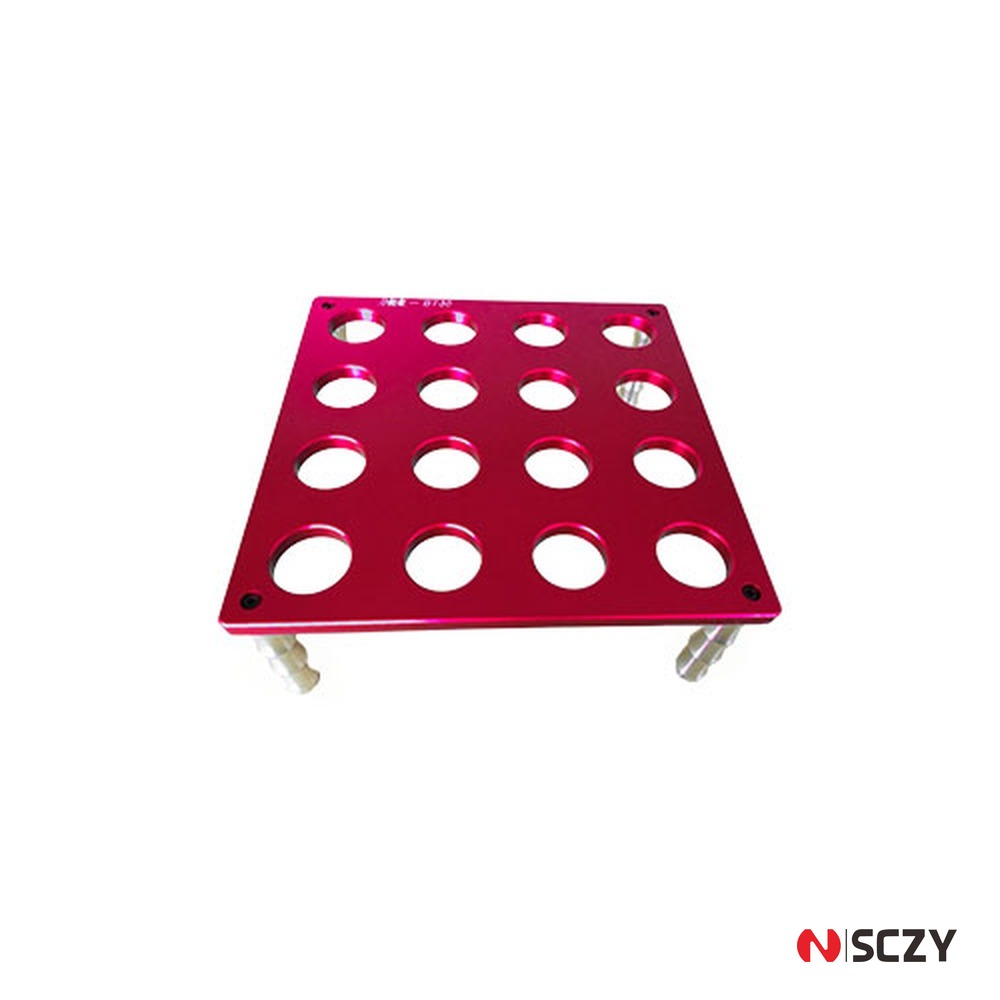
BT50 holders are heavy enough that handling is a safety topic, not an afterthought: lift with two hands or a holder cart, never swing a 10 kg taper over the spindle nose one-handed. Storage matters just as much — a reinforced all-metal rack keeps the taper off abrasive shelving and prevents the flange dings that later ruin flange contact and throw balance off.
Maintenance follows the same routine as smaller tapers — clean the taper and flange every cycle, check drawbar force periodically, and re-torque pull studs after the first few heavy cuts — but the consequences of neglect are larger: a fretted BT50 spindle bore costs far more to regrind than a BT40 one. Our tool holder maintenance routine applies directly, with one addition: check the flange drive keys whenever a holder has survived an interrupted-cut stall.
The Bottom Line
BT50 tool holders exist because bending stiffness, torque capacity and drawbar force all scale in the big taper’s favor — and because somewhere around Ø160 mm face mills, 40 mm boring bars and M30 tapping, BT40 simply runs out. Match the interface to the cuts you actually run, verify drawbar force and ATC capacity on the machine side, and specify taper contact, balance grade and pull stud details up front. If you are building or refreshing a BT50 holder set, tell us about your machines and the cuts that hurt — our engineers will help you match holders, pull studs and arbors to the work.
GET A QUOTE
Looking for tool holders for heavy-cutting applications?
Explore our product range or send us your requirements. Our team will be glad to review your inquiry.