
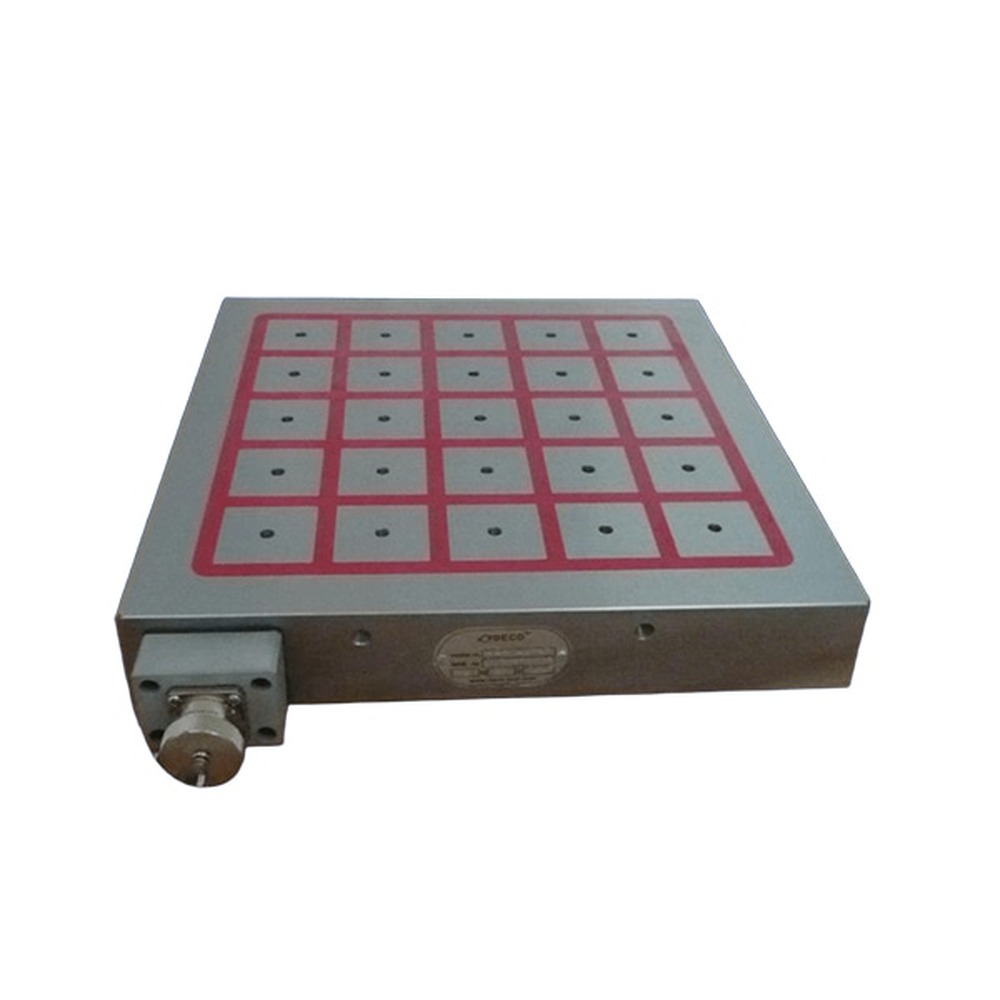
Walk through any die shop or plate-machining job and you’ll see the same bottleneck: a vise taking six minutes to clamp a thin steel plate that ends up bowed anyway. Magnetic chucks solve that problem — but only if you pick the right type for your work. Buyers routinely mix up the three families (permanent, electromagnetic, electro-permanent), and the wrong choice shows up later as a workpiece that let go mid-cut or a chuck that can’t be turned off.
This guide breaks down how each type actually works, where each one wins, and what to check before you order. It’s written for buyers sourcing CNC workholding from China and overseas suppliers, and it reflects what we see across mold, die, and plate-machining shops every week.
The Quick Answer
- Permanent magnetic chucks — no power at all, ideal for grinding and light milling of smaller ferrous parts.
- Electromagnetic chucks — full control of holding force and demagnetization cycles, but they drop everything the moment power fails.
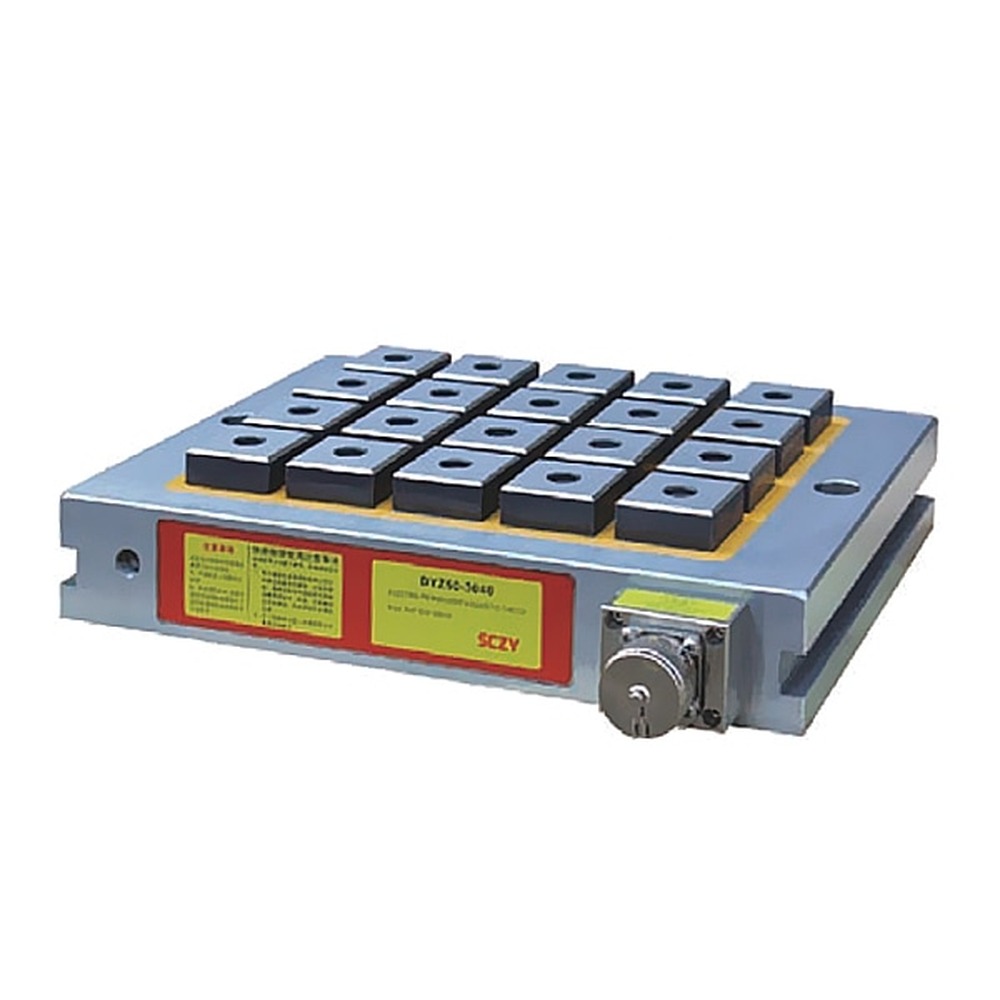
- Electro-permanent magnetic chucks — power only to switch on or off; holding force stays locked in with zero current. The default choice for heavy milling and modern CNC machining centers.
How the Three Types Actually Differ
Permanent Magnetic Chucks
Inside a permanent chuck, an array of neodymium or AlNiCo magnets sits under a pole plate. Turning a handle rotates the internal magnets so their flux either passes through the pole plate (ON) or short-circuits inside the body (OFF). No electricity is involved anywhere.
The advantages are obvious: nothing to fail during a blackout, no cables, no heat buildup, and holding force doesn’t degrade over a shift. The trade-off is that flux density is fixed. Fine for surface grinding and light cuts; under aggressive milling with heavy interruption loads, a permanent chuck on a large part can let you down. Pole pitch also matters — fine-pitch poles hold small, thin parts better, while coarse-pitch designs deliver deeper flux penetration for thicker stock.
Electromagnetic Chucks
Electromagnetic chucks generate flux from energized coils, so holding force is continuously adjustable — useful when you need to hold a part firmly but without distorting it, or when you want a controlled de-mag pulse at the end of a cycle. That adjustability is why they’re still common on surface grinders and in electric-discharge work.
The weakness is built into the physics: stop the current and the holding force stops with it. Power dips, a tripped breaker, a damaged cable — any of these can release a workpiece at full spindle speed. They also run warm over long cycles, and coil failure means a rebuild. Shops that use them manage this with e-stop interlocks and backup power, which adds cost that isn’t always obvious in the quote.
Electro-Permanent Magnetic Chucks
An electro-permanent chuck combines both ideas. Permanent magnets provide the actual clamping force. A brief electrical pulse (typically under a second) aligns an internal magnetic module to switch the chuck ON or OFF. After that pulse, no current flows — the magnetic circuit holds itself.
For CNC machining centers, this is usually the right answer. You get the safety of a permanent magnet (a power failure cannot release the part), the switching convenience of an electromagnet, and near-zero energy consumption and heat. The downsides: a higher purchase price than a plain permanent chuck, and switching requires a controller module. Most buyers recover that premium quickly in reduced setup time alone.
Side-by-Side Comparison
| Feature | Permanent | Electromagnetic | Electro-Permanent |
|---|---|---|---|
| Holding force source | Permanent magnets | Energized coils | Permanent magnets |
| Switching | Manual lever | Current on/off | 1-second pulse |
| Force fails if power fails? | No | Yes | No |
| Adjustable force | No | Yes | Limited |
| Heat buildup | None | Significant | Negligible |
| Suitable for heavy milling | Limited | Yes, with interlocks | Yes |
| Typical use | Grinding, light milling | Grinding, EDM | CNC milling, machining centers |
| Relative cost | Low | Medium | Highest |
Matching the Chuck to the Job
Thin Plates and Skip-Milling
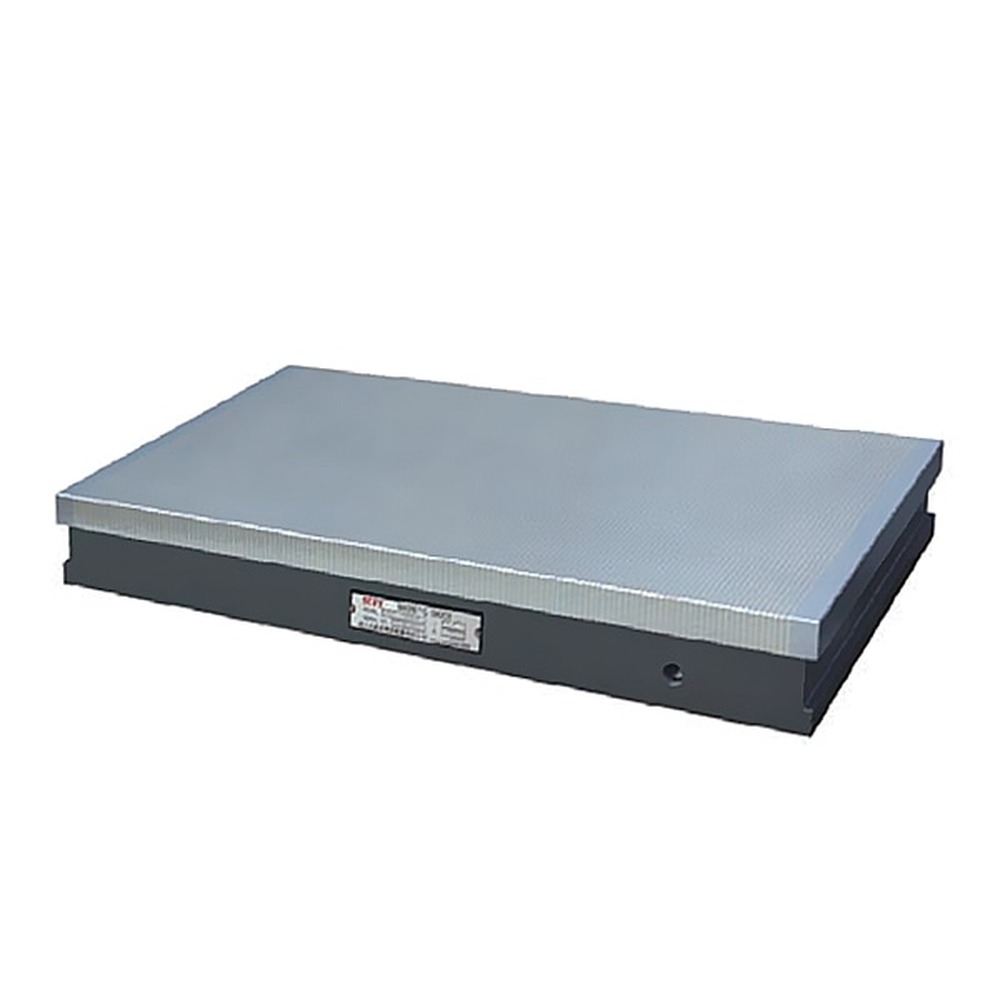
Thin steel and stainless plates are where magnetic workholding beats a vise most clearly — full-face support means no bowing. For parts under roughly 6 mm, ask for a fine-pitch pole or a “ripple” pole design; the closely spaced poles multiply the effective holding area on thin cross-sections. If you need to machine past the edges of the part without hitting poles, a straight-line pole layout lets the cutter travel across the surface between poles.
Mold and Die Components
Block machining — cavity blocks, cores, ejector plates — is the classic electro-permanent territory. Blocks are heavy, cuts are interrupted, and nobody wants a 40 kg block shifting at 6,000 RPM. Electro-permanent chucks with back-fence or side stops handle repeat setups on horizontal and vertical machining centers. Pair them with laminated pole extensions for parts that overhang the chuck body.
Grinding Applications
If your process is surface grinding, a plain permanent chuck is still hard to beat on cost. Look for: a hardened pole plate for wear life, a sealed construction that survives coolant, and an accessible de-mag accessory — ground parts come off the chuck magnetized and will carry swarf with them otherwise.
Non-Ferrous Work
Magnetic chucks hold ferromagnetic steel and cast iron only. Aluminum, brass, titanium, and stainless grades in the 300 family are effectively transparent to magnetic flux. If your mix is mostly non-ferrous, magnetic workholding is the wrong tool — vacuum chucks or mechanical clamping belong in that conversation instead.
What to Check Before You Order
- Rated holding force vs your cutting loads. Suppliers quote force per unit area (commonly 100–160 N/cm² for electro-permanent designs). Convert your heaviest milling loads into pull-out force and keep a safety margin of at least 3:1.
- Pole pitch and layout. Fine pitch for small parts, coarse pitch for penetration. Confirm the layout matches your typical workpiece size, not just the catalog photo.
- Sealing. Coolant ingress kills magnet arrays. Ask how the pole plate is sealed and whether the chuck is rated for flood coolant.
- Controller and cables. For electro-permanent chucks, confirm the switching controller ships with the chuck and matches your supply voltage — this is a common surprise in cross-border orders.
- Flatness and parallelism spec. A chuck that’s out of flat transfers its error into every part. Look for a stated ground-flat tolerance on the pole surface, typically 0.005–0.01 mm.
- Spare de-mag capability. Whatever type you choose, plan for demagnetizing parts after removal.
Setup and Care on the Shop Floor
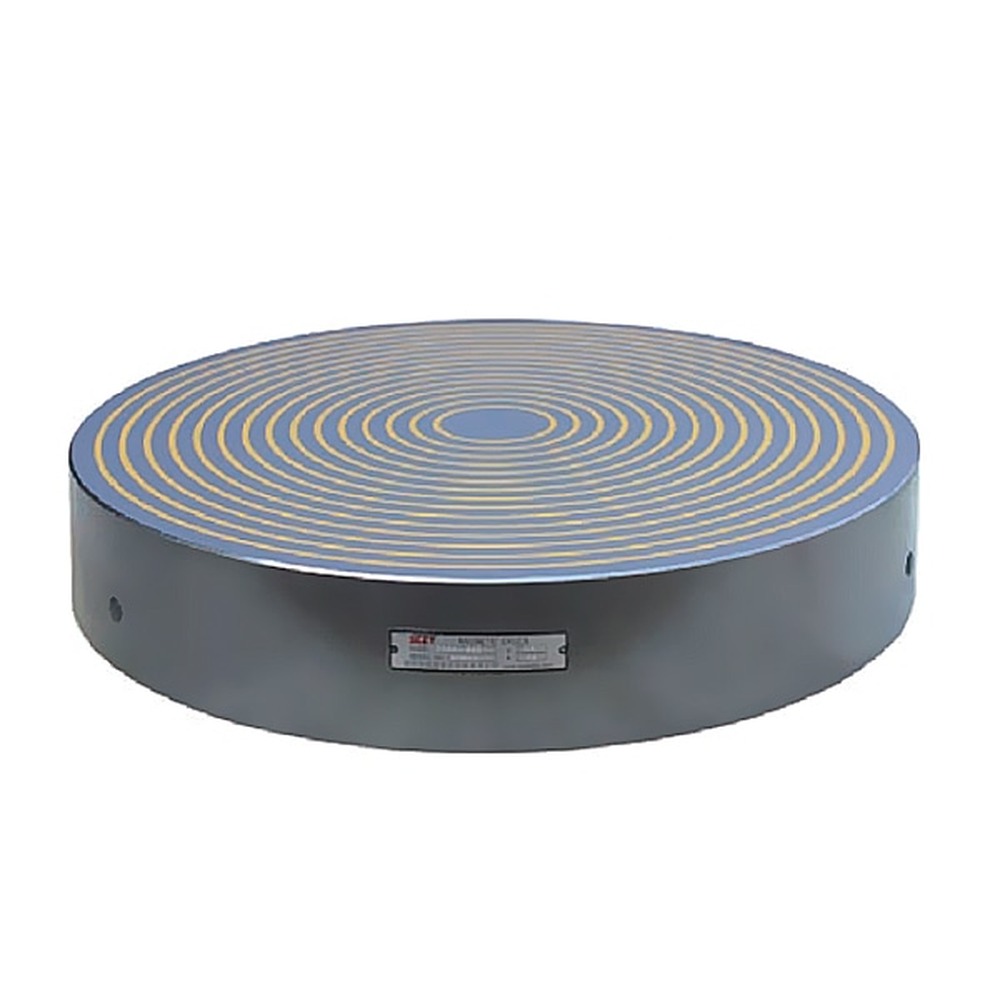
Magnetic chucks are low-maintenance, but a few habits decide whether one lasts five years or fifteen. Clean the pole surface every cycle — a single chip under a part creates both an accuracy error and a slip risk. Keep the switching electronics dry. Exercise the switch mechanism on manual chucks; a lever that sits unused for months stiffens up. And check the pole plate flatness with a indicator a few times a year, especially after any crash.
One more thing worth knowing: parts come off any magnetic chuck magnetized to some degree. Chips clinging to a finished bore are the usual symptom. A small de-magnetizing plate next to the machine solves it in seconds.
Frequently Asked Questions
Can a magnetic chuck hold a part during heavy milling?
Yes — an electro-permanent chuck with adequate holding force and proper safety stops is routinely used for heavy interrupted cuts in mold and die work. A plain permanent chuck is better reserved for grinding and light milling.
What happens if the power goes out mid-cut?
On an electro-permanent chuck: nothing. The clamping force is magnetic, not electrical, so the part stays locked. On an electromagnetic chuck, the part is released — which is exactly why shops with electromagnetic chucks must run interlocks and backup power.
Will the chuck magnetize my machine spindle or table?
The flux circuit is designed to close through the workpiece, not through surrounding hardware. Residual magnetism on nearby components is minor and can be removed with a de-mag tool.
How flat are magnetic chucks from the factory?
Quality ground pole plates come in at 0.005–0.01 mm flatness. Always confirm the spec in writing — it’s the number that decides whether a chuck is a precision tool or just a clamp.
Bottom Line
If your work is grinding small ferrous parts, a permanent chuck is the economical choice. If you need adjustable force on a grinder or EDM, electromagnetic designs still make sense — with the safety systems they require. For everything else on a CNC machining center, electro-permanent is where the industry has landed: safe against power loss, fast to switch, and cheap to run.
SCZY supplies permanent, electromagnetic, and electro-permanent magnetic chucks with matched controllers, ground to spec and export-packed. If you send us your workpiece sizes and typical cutting loads, we’ll recommend the pole pitch and holding-force rating that fits — usually within one working day. Get in touch here.



