
If you grind thin, small, or multi-part workpieces, the difference between a clean batch and a table full of scrapped blanks often comes down to one spec that buyers rarely ask about: pole pitch. A fine pole magnetic chuck packs many closely spaced north-south poles into the same working surface as a standard chuck, and that single design change decides how much of your part actually sits in a working magnetic circuit. This guide explains what pole pitch really does, how to read holding force ratings honestly, and where fine pole chucks beat both standard pitch and electro-permanent designs.
What “Fine Pole” Actually Means on a Chuck Face
Every magnetic chuck works the same way: flux leaves a north pole, passes through the workpiece, and returns through a south pole. The steel part becomes the bridge between poles. The spacing between one north pole and the next south pole is the pole pitch, usually quoted in millimeters.
Pole pitch and the flux path
On a standard pitch chuck, pole spacing is often 8 to 16 mm. On a fine pole chuck, spacing drops to roughly 1 to 3 mm, with the poles arranged in dense strips or a grid. The closer the poles are, the more pole pairs sit under any given part — and the more complete the flux loop through that part.
Think of it this way: a 25 mm square part sitting across one standard pole pair is essentially one small bridge between two poles. The same part on a fine pitch face crosses six to eight pole pairs, so multiple independent circuits pull it down at once. Total pull scales with the number of active circuits under the part, not with the nameplate force of the chuck.
Why standard pitch loses thin parts
Flux always takes the shortest, easiest path. When a part is thin — say 1 to 3 mm — and the poles are far apart, a large share of the flux jumps between adjacent poles through the air just under the part instead of climbing up through the steel. The part experiences very little downward pull, even though the chuck’s ammeter shows full excitation. This is the classic “thin plate flies off at wheel contact” failure, and it is almost always a pole pitch problem, not a “weak chuck” problem.
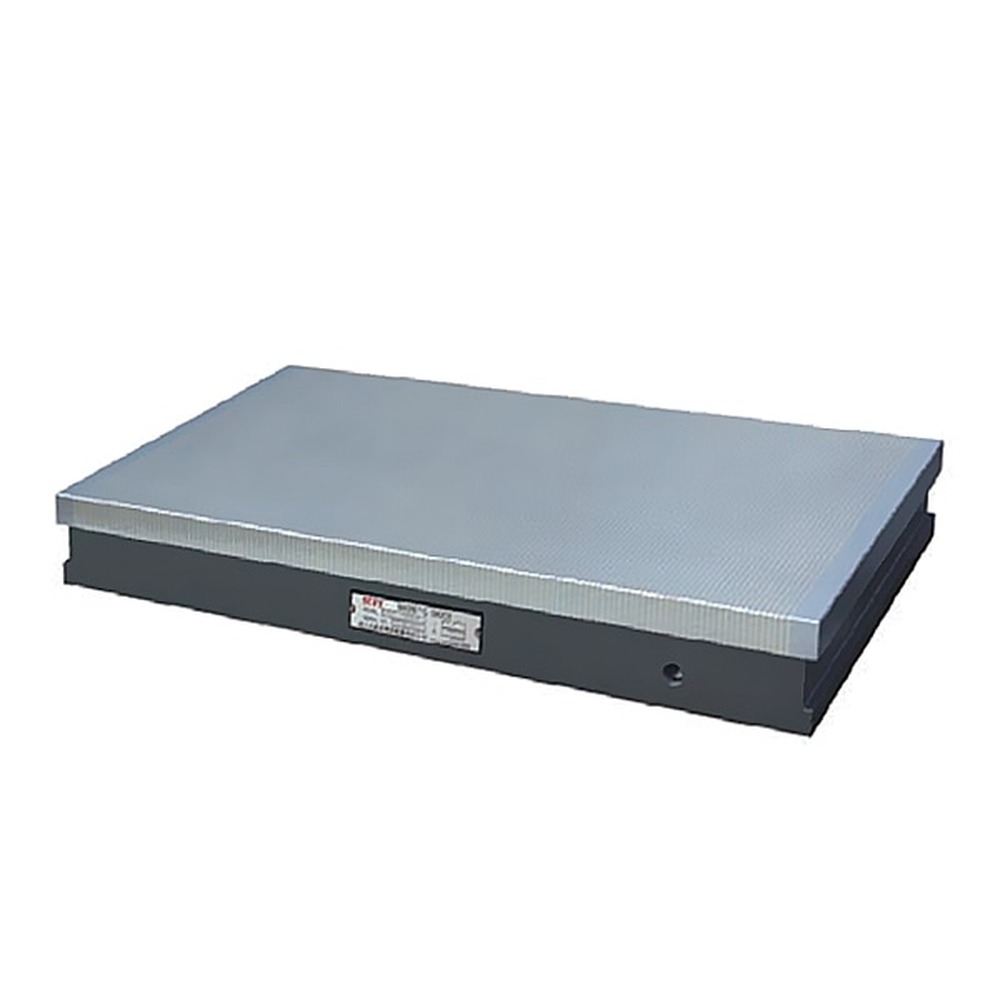
Holding Force: Reading the Rating Honestly
Chuck catalogs quote holding force in kilograms per square centimeter, but that number assumes ideal conditions. Three part-side factors decide what you actually get.
Thickness and contact area
Holding force rises with part thickness up to a point, then flattens once the part is thick enough to carry the full flux. Below that threshold — which depends on pitch — force drops steeply. As a practical rule, once part thickness approaches the pole pitch, you are in the danger zone. A 3 mm pitch face under a 1 mm thick part is starving for flux; the same part on a fine pitch face is far better served.
Surface finish and flatness
Every 0.01 mm of air gap costs you force. Rough sawn faces, mill scale, or a warped blank that rocks on the chuck all act like spacers. Fine pole faces are ground to a precision reference finish and should be treated that way: wipe them clean, stone off burrs on the part, and expect force to fall by 30–50% on a part that only touches on its edges.
Shear force, not just vertical pull
Grinding loads the part sideways. Fine pole chucks hold well in shear because friction is proportional to real normal force, and dense poles raise the normal force across the whole footprint. Still, heavy passes with aggressive wheels generate side loads that chuck friction alone cannot resist on small parts. Use stops — the hardened steel fences that sit in the pole channels — against the leading edge, and take lighter finishing passes on parts under about 3 mm.
Fine Pole vs Standard Pole vs Electro-Permanent: Side by Side
| Attribute | Fine pole electromagnetic | Standard pole electromagnetic | Dense pole electro-permanent |
|---|---|---|---|
| Typical pole pitch | 1–3 mm | 8–16 mm | 1.5–5 mm grid or strips |
| Thin parts (≤3 mm) | Excellent — many circuits under the part | Poor — flux shunts under thin stock | Good to excellent, depending on pitch |
| Small parts per setup | High — dozens of blanks held at once | Limited — parts may cover only one pole | High |
| Power during clamping | Continuous DC supply needed | Continuous DC supply needed | Pulsed only — holds on residual magnetism |
| Failure mode on power loss | Releases (machine interlock required) | Releases | Stays clamped |
| Heat input to chuck body | Coils warm up; minor thermal drift | Same | Near zero — no continuous coil current |
| Best fit | Surface and profile grinding of thin/small steel parts | Heavier stock, larger ferrous plates | Long-cycle grinding, EDM, unattended runs |
One point worth stressing: “fine pole” describes pitch, while “electro-permanent” describes the energization method. They are not rivals — dense pole electro-permanent chucks combine both ideas, which is why they dominate long-run grinding cells where a power glitch during a cycle would otherwise scrap the batch.
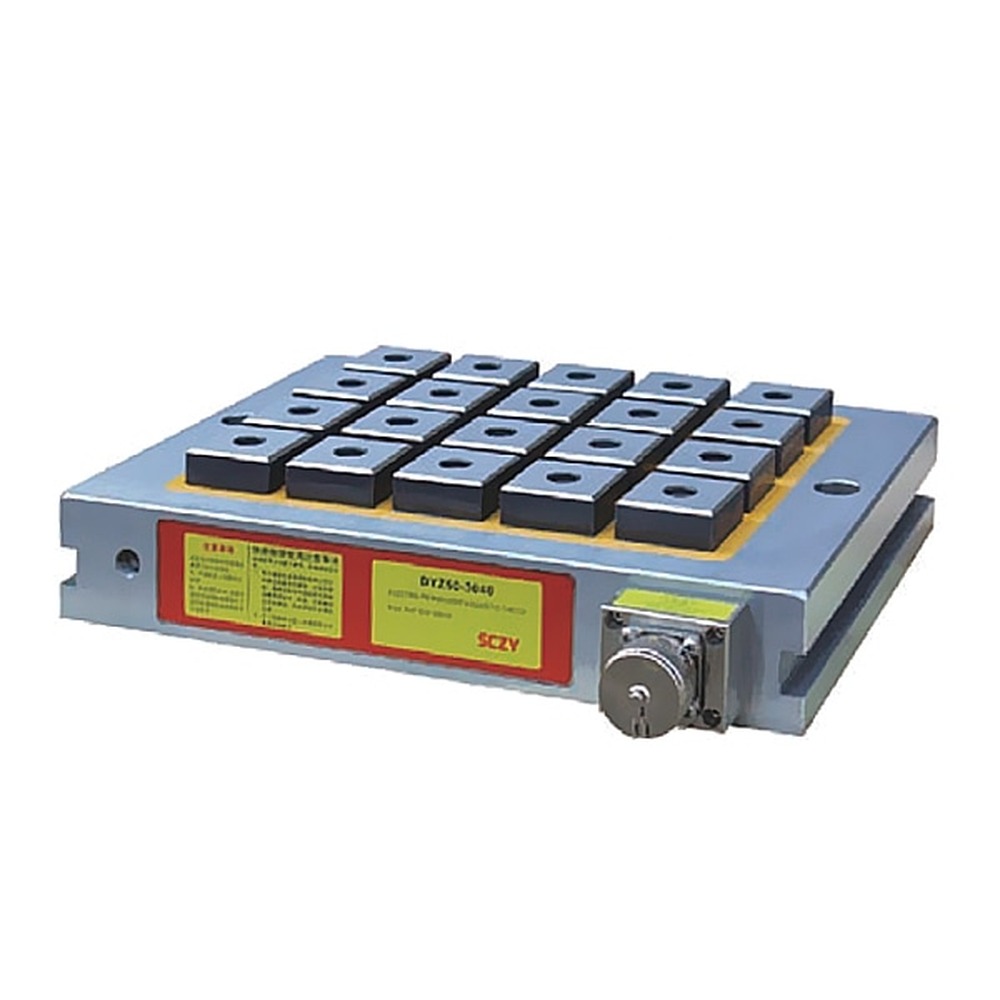
Where Fine Pole Chucks Earn Their Keep
Surface grinding thin sections
Shims, wear plates, gage blocks, knife blades, and decompression plates under 3 mm are the textbook case. On a standard pitch chuck these parts chatter, lift at the trailing edge, or simply let go. On fine pitch, the same parts sit dead flat because dozens of pole pairs pull evenly across the whole face — which also improves flatness by holding the part down instead of letting it bow up between distant poles.
Small part batch grinding
Fine pitch turns the whole face into usable real estate. A 300 × 150 mm face holds 40 to 60 blanks with 2–3 mm spacing between them, all at comparable force. Cycle time per part collapses because you wheel over a field of parts in one pass instead of loading pieces one at a time. For job shops quoting small ferrous parts by the hundred, this is usually the single biggest productivity lever in the department.
EDM and bench work
Fine pole magnetic chucks are standard fixtures on EDM machines for holding steel and carbide electrodes and small die inserts flat during sparking. The dense field holds short, stubby workpieces that a vise cannot grip, and the ground chuck face doubles as a machining datum.
Electromagnetic vs Electro-Permanent in Fine Pitch: How to Choose
If your parts are steel and your cycles are short with an operator at the machine, a fine pole electromagnetic chuck is simple and economical: energize, load, grind, demagnetize, unload. It needs a DC supply and a reliable interlock — if power drops mid-pass, the part releases, so pair it with wheel-head interlocks or feed it through a UPS.
If you run unattended cycles, long draws, or expensive blanks where a release means a crashed wheel, dense pole electro-permanent is the safer buy. Clamping is pulsed: a short current pulse flips the internal permanent magnet circuits on or off, so the chuck draws almost no continuous power, runs cool, and cannot drop a part during an outage. The trade-offs are higher unit cost and the need to demagnetize parts after unloading, since residual magnetism in the workpiece is real.
A Practical Selection Checklist
- Measure your thinnest production part. Choose pitch no larger than roughly the part thickness — thinner parts need finer pitch.
- Match the face size to the machine table, and confirm the chuck’s weight against your grinder’s load limit, since magnetic chucks are heavy.
- Ask for force ratings at your part thickness, not just the nameplate kg/cm² measured on a thick test block. A serious supplier will give you a thickness-force curve.
- Confirm the control package: a rectifier with ammeter for electromagnetic units; a pulsed magnetizing and demagnetizing controller with adjustable power levels for electro-permanent.
- Plan demagnetization. Both types leave parts and swarf magnetized; a demagnetizer plate or a degauss cycle in the controller should be part of the order, not an afterthought.
- Specify seal quality if coolant floods the face — grinding slurry finds every gap in a poorly sealed chuck.
Common Mistakes That Cause Parts to Let Go
Blaming the chuck when the setup is wrong
Before replacing a chuck, check the usual list: oily or wet part faces, burrs under the part, scale on the contact side, and grinding passes heavier than the shear rating. Most “weak chuck” complaints trace to one of these.
Skipping the residual magnetism problem
Parts leaving a magnetic chuck stick together, attract swarf, and jam feed bowls downstream. Build degaussing into the process, and inspect the chuck face for embedded chips — a steel chip bridging two poles creates a false flux path that steals force from the part.
Ignoring heat
Electromagnetic coils warm the chuck body over a long shift, and a few microns of thermal rise is enough to matter on tight flatness calls. If your prints call for single-digit micron flatness, either favor electro-permanent or let the chuck thermally stabilize before finishing passes.
Bottom Line
Pole pitch is the spec that decides whether a magnetic chuck actually holds your part. For thin and small ferrous work — especially surface grinding — a fine pole magnetic chuck converts flux that a standard pitch face wastes into real, even holding force across the entire table, and dense pole electro-permanent versions add fail-safe clamping for unattended production. Match pitch to your thinnest part, demand thickness-based force data, and budget for demagnetization, and the chuck will hold flat, fast, and safely for years.
SCZY supplies fine pole electromagnetic chucks, dense pole electro-permanent magnetic chucks, and matching controllers for grinding, milling, and EDM applications. Tell us your part thickness and material, and we will recommend the right pitch and chuck size for your machine.
GET A QUOTE
Looking for magnetic workholding for thin parts?
Explore our product range or send us your requirements. Our team will be glad to review your inquiry.



