If your shop runs machines from DMG MORI, Heller, Grob or Chiron, the spindle almost certainly takes an HSK-A63 tool holder — and if you have ever ordered holders for a mixed HSK fleet, you know the confusion starts the moment a quotation sheet lists HSK-A, HSK-E and HSK-C as if they were interchangeable. They are not. Picking the wrong interface letter is an expensive mistake: the holder may physically enter the spindle yet fail to be clamped, torqued or changed correctly.
This guide explains how the HSK interface works, what separates the A, E, C and F variants, how clamping force determines real-world rigidity, and what to check before ordering an HSK-A63 tool holder set. It is written for purchasing and process engineers, so everything below focuses on the decisions you actually make when buying.
Why HSK Replaced Long Tapers on High-Speed Spindles
HSK (from the German Hohl-Schaft-Kegel, “hollow taper shank”) was standardized as DIN 69893 to solve one problem: long 7:24 tapers such as BT40 and CAT40 lose contact at the flange as spindle speed rises. The spindle nose expands from centrifugal force, the holder does not, and the taper momentarily unseats — pulling the tool upward and destroying runout and repeatability.
HSK attacks this from two directions. The taper is short and hollow, so it flexes outward with the expanding spindle nose instead of fighting it. And the holder seats against a flat flange face at the front of the spindle, which keeps a rigid, repeatable reference regardless of speed. The results:
- Radial and axial stiffness well above an equivalent BT holder at the same overhang, because contact is doubled (taper + flange).
- Axial repeatability typically within 1–3 micrometres in Z — the reason HSK dominates 5-axis simultaneous machining.
- Speed capability far beyond long tapers, which is why HSK-A63 is the standard interface on 12,000–24,000 rpm machining centres.
None of this makes HSK “better” in absolute terms. For heavy mould roughing at 8,000 rpm, a BT40 or BBT40 dual-contact setup remains perfectly rational. HSK earns its premium in high-speed, high-accuracy and 5-axis work — which is exactly why the interface variants matter before you buy.
How the HSK Interface Actually Clamps
An HSK holder has a hollow, thin-walled 1:10 taper. Inside the spindle, segmented clamping jaws grip the inner bore of the shank and pull it back with force measured in kilonewtons. As the jaws expand, they push outward against the taper walls, so clamping pressure acts from inside — the opposite of a long taper, which relies on a drawbar pulling the shank into a solid cone.
Two contact zones do the work: the flange face, which seats against the spindle nose and provides the axial datum (and most of the bending rigidity), and the short taper, which centers the holder and shares the clamping load while expanding in tandem with the spindle at speed.
Because the holder is pulled from inside, wear shows up differently than on BT spindles: the usual failure mode is loss of spindle clamping force (fatigued jaw segments, contaminated bores) rather than bell-mouthing of the taper. Buying consequence: schedule a clamping force check before blaming a new batch of holders for chatter or pull-out.
The HSK Family at a Glance: What the Letters Mean
The letter after “HSK” describes how the holder is driven and changed, not the size; the number is the flange diameter in millimetres. Both must match the spindle exactly.
HSK-A — the general-purpose workhorse
HSK-A holders have two asymmetric drive slots in the flange plus gripper slots for automatic tool changers. The drive slots transmit torque positively through spindle keys, which is why HSK-A63 handles heavy milling and drilling without slipping. It is by far the most common HSK interface on machining centres, and the default answer when a customer simply says “HSK-63 spindle”.
HSK-E — the balanced, high-speed specialist
HSK-E holders are fully symmetrical: no drive slots, identical mass distribution around the axis, torque transmitted by clamping friction alone. That symmetry is why HSK-E spindles routinely run 20,000–42,000 rpm on small sizes — E25 and E32 are the standard interfaces on high-speed spindles for graphite, aluminium and electrode work. The trade-off is torque: without positive drive keys, E holders are not the right choice for heavy roughing. Use E where speed and balance dominate, A where torque dominates.
HSK-C and HSK-F — the edges of the family
HSK-C is the manual-clamping twin of HSK-A: same shape and drive slots, but no gripper slots, so it is loaded by hand on grinders, EDM machines and presetters rather than by an ATC. HSK-F is a rarer variant optimized for higher speeds with a smaller flange relative to the taper. Neither is a drop-in substitute for A or E; the clamping mechanics differ.
HSK-A63 vs HSK-E63 vs HSK-A100: The Numbers That Matter
The table below compares the three interfaces you are most likely to quote against each other. Values are typical industry figures — always defer to the spindle manufacturer’s datasheet.
| Attribute | HSK-A63 | HSK-E63 | HSK-A100 |
|---|---|---|---|
| Flange diameter | 63 mm | 63 mm | 100 mm |
| Typical nominal clamping force | ≈ 18 kN | ≈ 18 kN | ≈ 40 kN |
| Drive system | 2 drive slots + spindle keys | Symmetrical, friction only | 2 drive slots + spindle keys |
| Automatic tool changer | Yes | Yes | Yes |
| Practical speed range | ≈ 12,000–24,000 rpm | ≈ 20,000–30,000 rpm | ≈ 8,000–15,000 rpm |
| Torque capacity for roughing | High | Limited | Highest |
| Typical applications | 5-axis VMC, die/mould finishing, aerospace | High-speed milling of graphite, aluminium, electrodes | Large structural parts, heavy milling, titanium |
One practical reading: E63 is rare precisely because it splits the difference badly. At 63 mm flange size you are usually running either a general-purpose spindle (buy A) or a genuinely high-speed spindle where the builder chose E25/E32 (buy E). If a reseller offers you E63 holders “as an equivalent” for an A63 spindle, that is a red flag — the drive slots are simply not there.
Clamping Force: The Number That Decides Whether HSK Works
Because HSK grips from inside the hollow shank, the system lives or dies on spindle clamping force. Every HSK datasheet specifies a minimum force at the spindle, and the holder’s permissible residual clamping requirement scales with speed — at 20,000 rpm the holder needs far more grip than at 6,000 rpm to stay seated.
What wears clamping force down
Jaw segments inside the spindle fatigue over millions of tool changes. Chips and coolant residue migrate into the holder bore, and a holder inserted with a scored or dirty bore cannot be gripped evenly. Through-spindle coolant adds another failure path: a leaking seating face depressurizes the seal.
How to check it before blaming the holders
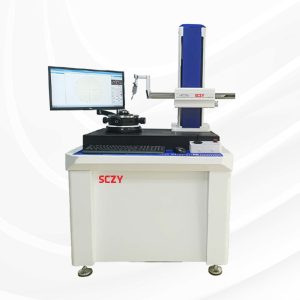
A static clamping force gauge measures spindle grip in kilonewtons in minutes. Most builders publish a wear threshold (an HSK-A63 spindle measuring below roughly 15 kN is due for maintenance). If you see pull-out, Z-axis drift or unexplained runout after tool changes, measure clamping force first — replacing holders will not fix a fatigued spindle.
Buying an HSK-A63 Tool Holder Set: A Practical Checklist
1. Confirm the exact spindle spec, not just “HSK-63”
Ask for the spindle datasheet: interface letter (A/E/C/F), flange size, maximum speed and coolant sealing type. Two machines can both take “HSK-63” yet require different holders — the datasheet also tells you whether through-spindle coolant needs a sealed flange or an open tube design.
2. Match holder type to the cutting data
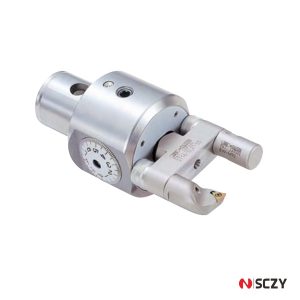
Within any HSK interface you buy the same inner families as on BT spindles: ER and hydraulic collet chucks, milling chucks and shrink-fit holders. For finishing and small tools, hydraulic and shrink-fit chucks deliver the best runout; for roughing, prefer positive-drive designs. A shrink-fit HSK holder is the top choice at high speed because the nose is symmetrical and adds almost no imbalance.
3. Check the balance grade against your speed
A holder marked G6.3 at 12,000 rpm does not automatically stay acceptable at 25,000 rpm — permissible residual unbalance shrinks as speed rises, and G2.5 is the usual target for high-speed HSK work. Above roughly 15,000 rpm, specify the balance grade when ordering instead of assuming it.
4. Plan the gauging and storage side from day one
HSK holders are pulled from inside, so they need compatible presetting adapters and protective caps that shield both taper and bore. A dedicated cleaning and storage routine matters more than on BT systems — a single chip in the bore compromises the entire clamping cycle.
5. Buy for the fleet, not for one machine
Standardizing on HSK-A63 across several 5-axis centres means one set of presetting adapters, one spare-holder pool and one balance spec — savings that usually exceed the unit-price discount you could negotiate on a single order.
Where Hydraulic and Shrink-Fit Holders Fit into an HSK Setup
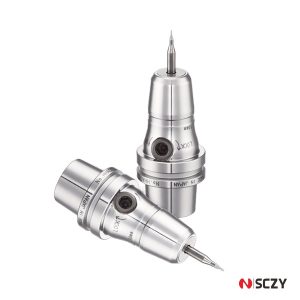
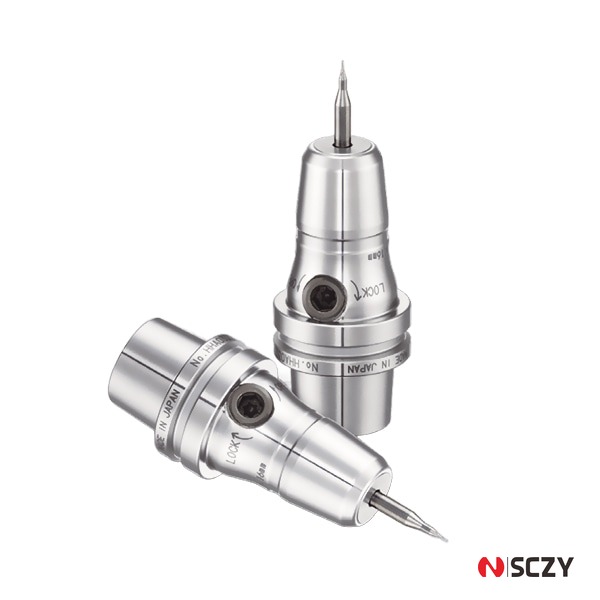
Hydraulic expansion chucks are especially attractive on HSK-E spindles driving small tools: the hydraulic sleeve delivers runout around 3 micrometres or better, damps vibration and adds negligible imbalance — exactly the profile a 30,000 rpm graphite-electrode job needs. Slender “pencil” hydraulic holders extend this into deep cavities and narrow ribs.
Shrink-fit HSK holders take the opposite route to the same goal: an induction-heated interference fit with no moving parts. The combination “HSK shrink-fit + carbide end mill” is the standard answer for hardened-die finishing and thin-wall aluminium work. Whichever route you choose, order the holders and the heating or pressurizing equipment as one package — clamping performance depends on both.
Common Buying Mistakes with HSK Tool Holders
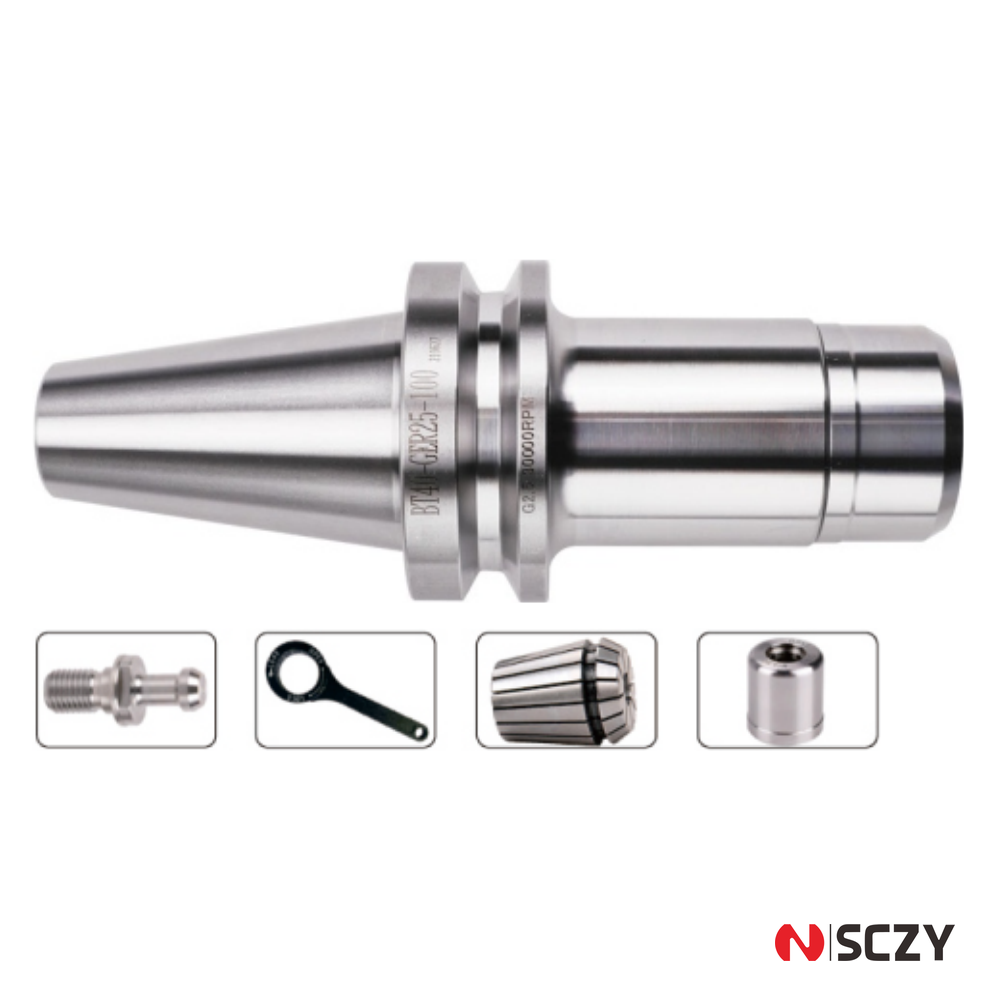
- Ordering by flange number only. “HSK-63” without the letter invites A/E confusion — an E holder in an A spindle cannot transmit torque through the keys at all.
- Ignoring the coolant specification. Holders for through-spindle coolant are sealed differently than for external flushing; mixing them up shows up as lost pressure at the tool.
- Treating balance as optional. At HSK speeds, an unbalanced holder costs spindle bearing life and surface finish simultaneously. Specify the grade on the order.
The Bottom Line
An HSK-A63 tool holder is the safe, torque-capable default for most 5-axis and high-speed machining centres; HSK-E is the symmetrical specialist for very high spindle speeds on small tools; HSK-C belongs on manual machines. Get four things right — interface letter, clamping force, holder family and balance grade — and HSK delivers the rigidity and repeatability that made it the standard on modern European machines.
Buying HSK-A63, HSK-A100 or HSK-E holders for a mixed fleet and want a quotation that matches your actual spindle datasheets? Contact SCZY with your machine list and cutting data — our engineers will propose holder families, balance grades and coolant sealing for each spindle, with flexible MOQ for trial orders.