
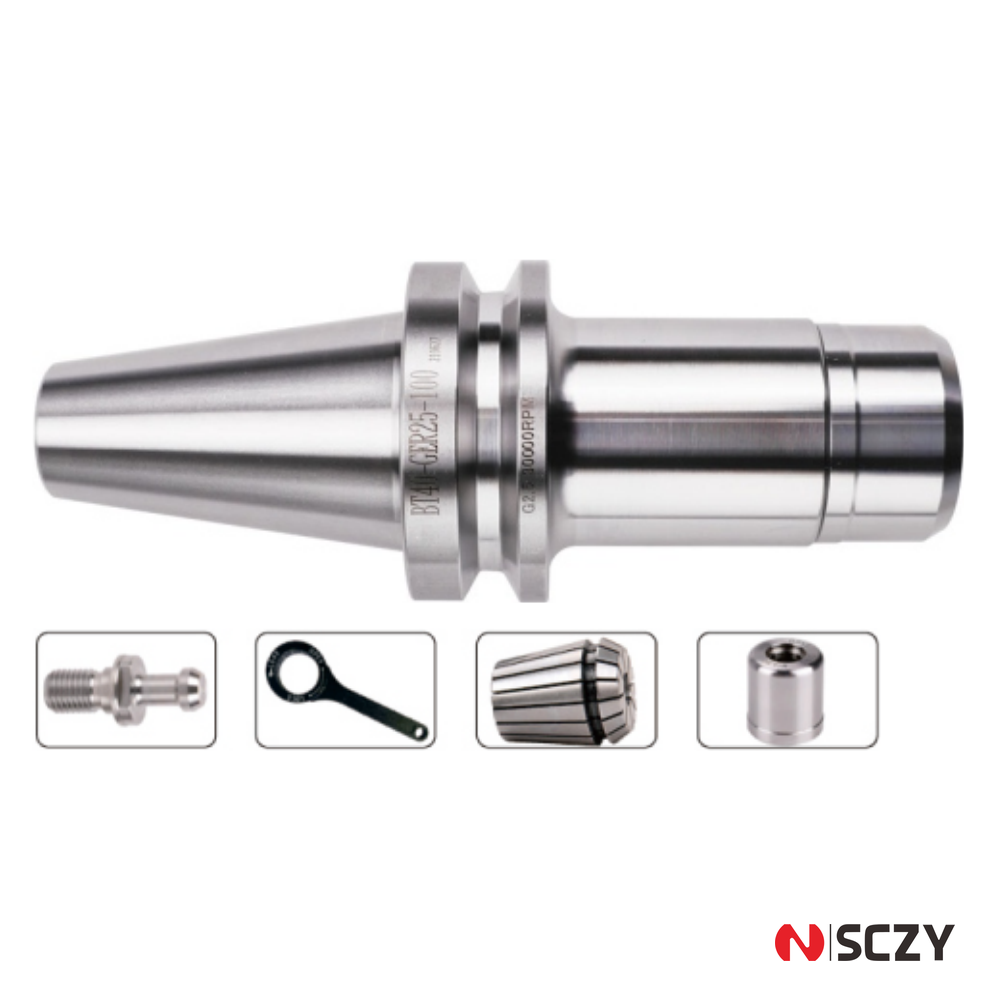
Walk through most general-purpose machine shops and one item will appear on every spindle, presetter and shadow board: the BT40 tool holder. It has been the default 40-taper interface for decades, it is manufactured by dozens of factories at every price point, and it is still the first taper we recommend to buyers who machine a mixed portfolio of parts. The catch is that “BT40 tool holder” is not one product. Under that single taper live six different holder types, each with a different job, a different runout budget and a different failure mode. This guide maps them out the way we do when advising customers on a first BT40 order: type by type, with the numbers that actually drive the buying decision.
Why BT40 Is Still the Default Taper in Most Shops
BT40 is a 7:24 self-releasing taper defined by the Japanese JIS B 6339 (MAS-BT) standard. The wide, shallow taper locates the holder rigidly in the spindle, the flange carries two drive slots that transmit torque, and an M16 pull stud (retention knob) clamps the whole assembly against the drawbar. The result is an interface that is cheap to manufacture, nearly impossible to install incorrectly, and forgiving on older machines with tired drawbar force.
If you also quote work on machines with CAT40 spindles, note that the two share the same 44.45 mm taper angle and gauge diameter, but the flange geometry and pull stud thread are different. A BT40 holder will not seat correctly in a CAT40 spindle and vice versa. We cover the pull stud differences in detail in our BT40 vs CAT40 pull stud guide.
The BT40 Tool Holder Dimensions That Actually Matter
Three dimensions decide whether a BT40 holder fits your machine and your tool magazine, and none of them is the taper itself:
- Gauge length (projection): the distance from the gauge line to the nose of the holder. ER collet chucks are commonly stocked at 70 mm and 100 mm projection. Too short and the nut collides with the workpiece; too long and you give up rigidity you did not need to lose.
- Flange diameter and nut diameter: the BT40 flange is 63 mm, but the clamping nut on an ER32 chuck projects further. Check the tool pocket spacing on your umbrella or chain magazine so neighboring tools do not clash.
- Balance grade: a standard G6.3 balanced holder is fine up to roughly 10,000–12,000 rpm. Above that, specify G2.5 balancing and matched pull studs. Our G2.5 vs G6.3 balancing guide explains how the grade converts to residual unbalance at your spindle speed.
BT40 Tool Holder Types: Six Options and What Each Is For
1. ER Collet Chucks — The Flexible Workhorse
An ER40 or ER32 collet chuck on a BT40 shank is the single most versatile holder you can buy. One chuck covers a continuous range of shank diameters in 1 mm (or 1/32″) steps by swapping collets, which is why it dominates job-shop tool cribs. With A-grade or AA-grade collets, expect total indicated runout of 5–10 μm at 3×D — accurate enough for most milling and drilling, and predictable if you buy the collets and chuck from the same supplier. The trade-offs: gripping force per collet is modest compared with hydraulic or shrink-fit systems, and runout degrades as collets wear, so a used collet is a false economy. We explain the grades in our ER collet runout guide.
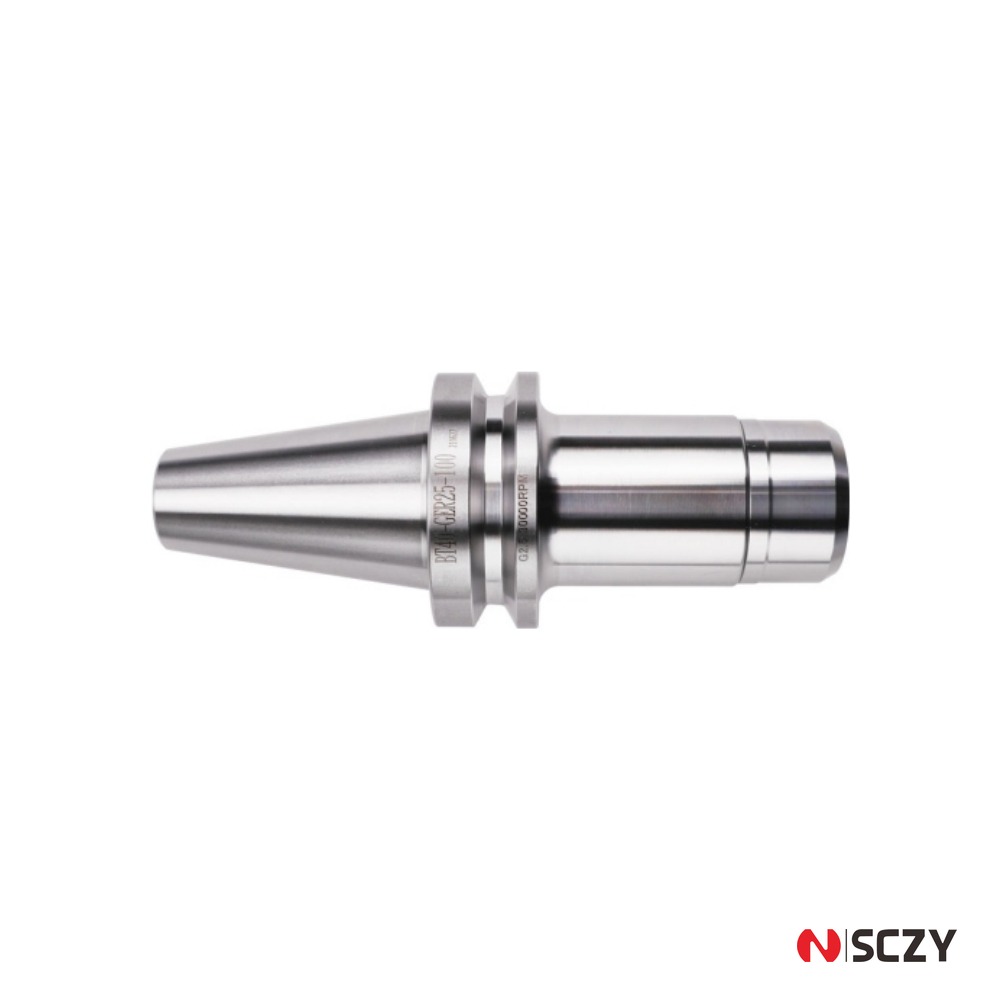
2. Hydraulic Expansion Chucks — Quiet Precision
Hydraulic chucks use a thin-walled expansion sleeve pressurized by a locking screw. The sleeve closes evenly around an h6-ground shank and delivers 3–5 μm TIR with excellent damping, which visibly improves wall finish on aluminum and stainless finishing passes. They are also the quietest clamping system to operate: no collet nut torque, no hammer. The limits are cost, a smaller maximum diameter (typically up to 32 mm sleeves), and the requirement for a clean, ground shank — a lamination or dent in the tool shank will damage the sleeve. For shops doing die and mold finishing, one or two hydraulic chucks usually pay for themselves in scrap avoidance.
3. Shrink-Fit Holders — Maximum Grip for Carbide Shanks
Shrink-fit holders carry the carbide-shank tool themselves: heat the bore with an induction heater, drop the tool in, and the cooled steel clamps with more force than any mechanical system. The payoff is 2–4 μm runout, the smallest nose diameter in the portfolio, and the highest rigidity — ideal for hardened-steel machining and aggressive carbide end mill work. The infrastructure is the catch: an induction machine, one dedicated holder per shank diameter, and disciplined handling. If you cut hardened die steel daily, the system pays back; if you change tools hourly across random diameters, ER or hydraulic is the better first investment.
4. Milling Chucks and Side-Lock (Weldon) Holders — Built for Torque
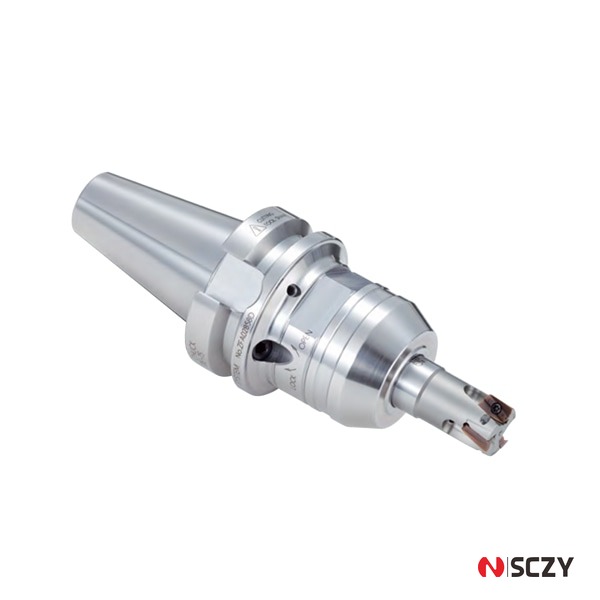
Heavy milling puts two demands on a holder: transmit serious torque and survive shock loads. Side-lock end mill holders with a Weldon flat are the traditional answer — cheap and nearly unbreakable, but the clamping screw seats the tool off-center, so expect 15–30 μm or worse runout. Modern power milling chucks (sometimes called high-torque chucks) achieve similar torque capacity with 10–20 μm runout and better balance, and they accept plain parallel shanks. For indexable shell mills and heavy roughing in steel, a power milling chuck on BT40 is the sensible default; save side-lock holders for roughing work where runout genuinely does not matter.
5. Shell Mill Arbors — For Face Mills
Face milling on a BT40 spindle runs on a shell mill arbor: a pilot diameter locates the cutter, mounting screws clamp it, and drive keys transmit torque. Specifying is simple but worth care — match the arbor pilot diameter and length to the cutter bore (commonly 16, 22, 27 or 32 mm), and keep the pilot clean. A nicked pilot face is a common root cause of cutter runout that operators wrongly blame on the machine.
6. Tapping and Drilling Holders
Two sub-types cover most hole-making work. For rigid tapping on machines with synchronized spindle and Z-axis, a synchronous tapping chuck or even an ER collet chuck with a square-drive collet is standard. For older machines or long-engagement threads, a tension-compression tapping holder floats the tap axially and compensates feed mismatch, which measurably reduces tap breakage in tough materials. For pilot drilling and center drilling, a keyless drill chuck on a BT40 arbor covers 1–13 mm bits with adequate precision. Our tap holder selection guide walks through that decision in depth.
Comparison Table: BT40 Tool Holder Types at a Glance
| Holder type | Typical TIR at 3×D | Best for | Watch out for |
|---|---|---|---|
| ER collet chuck (ER32/ER40) | 5–10 μm with A/AA collets | Mixed tooling, drills, finishing end mills | Collet wear; modest grip force |
| Hydraulic expansion chuck | 3–5 μm | Finishing, small diameters, chatter-prone work | Price; ground h6 shanks only; sleeve damage |
| Shrink-fit holder | 2–4 μm | Hardened steel, carbide shanks, high rigidity | Needs induction heater; one holder per diameter |
| Power milling chuck | 10–20 μm | Heavy roughing, indexable cutters | Bulkier nose; higher cost than side-lock |
| Side-lock / Weldon holder | 15–30 μm+ | Low-cost roughing where runout is not critical | Off-center clamping screw; poor balance at speed |
| Shell mill arbor | Depends on cutter fit | Face mills 50–160 mm | Pilot damage causes cutter runout |
How to Choose: Five Questions Before You Buy
When customers ask us to spec a first BT40 tooling package, we work through five questions in order:
- What is the dominant operation? Roughing steel points to power milling chucks; finishing points to hydraulic or shrink-fit; mixed jobbing work starts with a set of ER chucks.
- What shank types do your cutters have? Carbide shanks suit shrink-fit; ground parallel shanks suit hydraulic; Weldon flats force side-lock; anything with a square needs ER or a tapping chuck.
- How often do you change tools? High changeover frequency favors ER collets; long dedicated runs favor shrink-fit and hydraulic.
- What spindle speed? Under 10,000 rpm, G6.3 balancing is sufficient. Above 12,000 rpm, specify G2.5 holders and consider the taper condition of the spindle itself.
- What does the spindle taper look like today? A worn spindle eats precision holders. Before upgrading tooling, check contact as described in our taper wear inspection guide.
BT40 vs BT50: When to Move Up a Size
BT50 is the same 7:24 system scaled up: a 69.85 mm gauge diameter, a 100 mm flange and an M24 pull stud. Choose it when you are driving large face mills, taking heavy interrupted cuts in cast iron or forging flash, or when your BT40 holders repeatedly pull out of the spindle under load. Choose BT40 (or BT30 on small VMCs) when spindle speed, magazine capacity and changeover time matter more than raw torque. A practical rule: if the majority of your cutting tools are under 63 mm diameter and your spindle speed exceeds 6,000 rpm, BT40 remains the right center of gravity for the tool crib. Upsizing the whole crib to BT50 “for safety” usually costs you performance where it counts: projection grows, balance speed drops and changeovers slow down.
Details People Skip: Pull Studs, Cleaning and Inspection
Three low-cost items decide more BT40 tool life than the holders themselves. First, the pull stud: an incorrect chamfer angle or a worn contact surface changes drawbar geometry and can cause chatter or ejection. Buy studs matched to your spindle brand and replace them on a schedule. Second, taper cleanliness: a single chip pulled into the taper seats the holder a few hundredths out, multiplies runout, and begins fretting the spindle bore. Wipe both tapers at every tool change — it takes five seconds. Third, a monthly drawbar force check; a weak drawbar quietly degrades every holder in the magazine at once.
Storage and Handling: Protect the Taper You Paid For
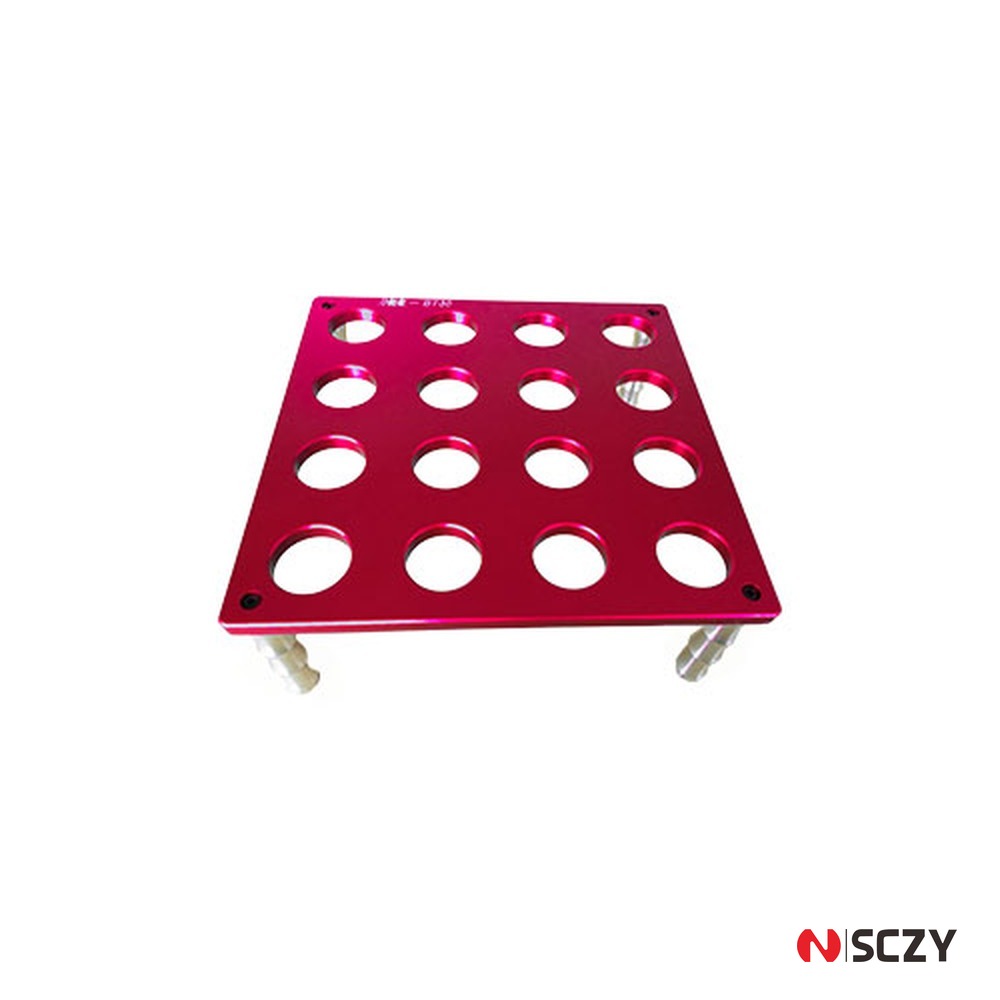
Precision holders are easy to damage in storage. Leaving BT40 chucks loose in a drawer lets tapers knock against each other, and rust on a taper permanently raises its surface roughness. A simple all-metal rack keeps each holder seated flange-up with the taper protected, makes inventory visible at a glance, and pairs well with protective caps on the nose threads. In humid coastal climates, add a light coat of way oil on the tapers before weekend shutdowns.
Build Your BT40 Inventory Around the Work, Not the Catalog
A rational starting BT40 tool holder inventory for a two-machine job shop looks like this: six to eight ER32 chucks in mixed projections for general work, one or two hydraulic chucks for finishing, a pair of power milling chucks for roughing, one shell mill arbor sized to your largest face mill, and a synchronous or tension-compression tapping chuck. Add shrink-fit only when hardened-steel work justifies the heater. From there, let your tool presetter data tell you what to buy next: the diameter you re-set most often is the next chuck worth owning.
If you are building or upgrading a BT40 tooling package and want a second opinion on the mix, SCZY supplies BT40 collet chucks, milling chucks, arbors and accessories sourced from audited Chinese factories with full QC documentation. Send us your tool list and spindle specs — we will return a holder recommendation with quantities and pricing within one business day.



