
If you quote machining work across borders, you will eventually run into the question of CAT40 vs BT40 tool holders. Both are 7/24 taper, V-flange holders that look almost identical on a shelf, and both are used on vertical machining centers by the tens of thousands. Yet they are not interchangeable, and mixing them up leads to crashed tool changes, poor runout and drawbar damage. This guide walks through what the two standards share, where they genuinely differ, and how to buy holders for a crib that serves both spindle types.
Where CAT40 and BT40 Come From
The two standards grew out of different machine-building traditions.
CAT40: the ASME B5.50 American standard
CAT40 follows ASME B5.50. The “CAT” name traces back to the V-flange interface popularized on Caterpillar machine tools, and the style became the default on North American machine tools. If your Haas, Fadal, or most US-built VMCs take a “CAT 40” holder, this is the specification your supplier must meet.
BT40: the JIS B 6339 Japanese standard
BT40 follows JIS B 6339, the Japanese industrial standard. It dominates on Japanese and Taiwanese machine tools and across Asian manufacturing generally. Note that “BT” holders also exist in BT30 and BT50 sizes; the “40” refers to the taper size, and the same logic applies across the family.
Europe added a third cousin, DIN 69871 (often called SK40 or ISO 40), which shares the 7/24 taper but differs again in flange details. The same comparison logic in this article applies whenever you cross between these families.
What CAT40 and BT40 Share
Before the differences, it helps to understand why people confuse the two in the first place.
The same 7/24 taper
Both holders seat on a 7-degree, 7-minute (7/24) taper — the self-holding geometry that has defined milling machine spindles for a century. The taper does the locating and most of the rigidity work; the drawbar pulls the holder into the spindle through the pull stud.
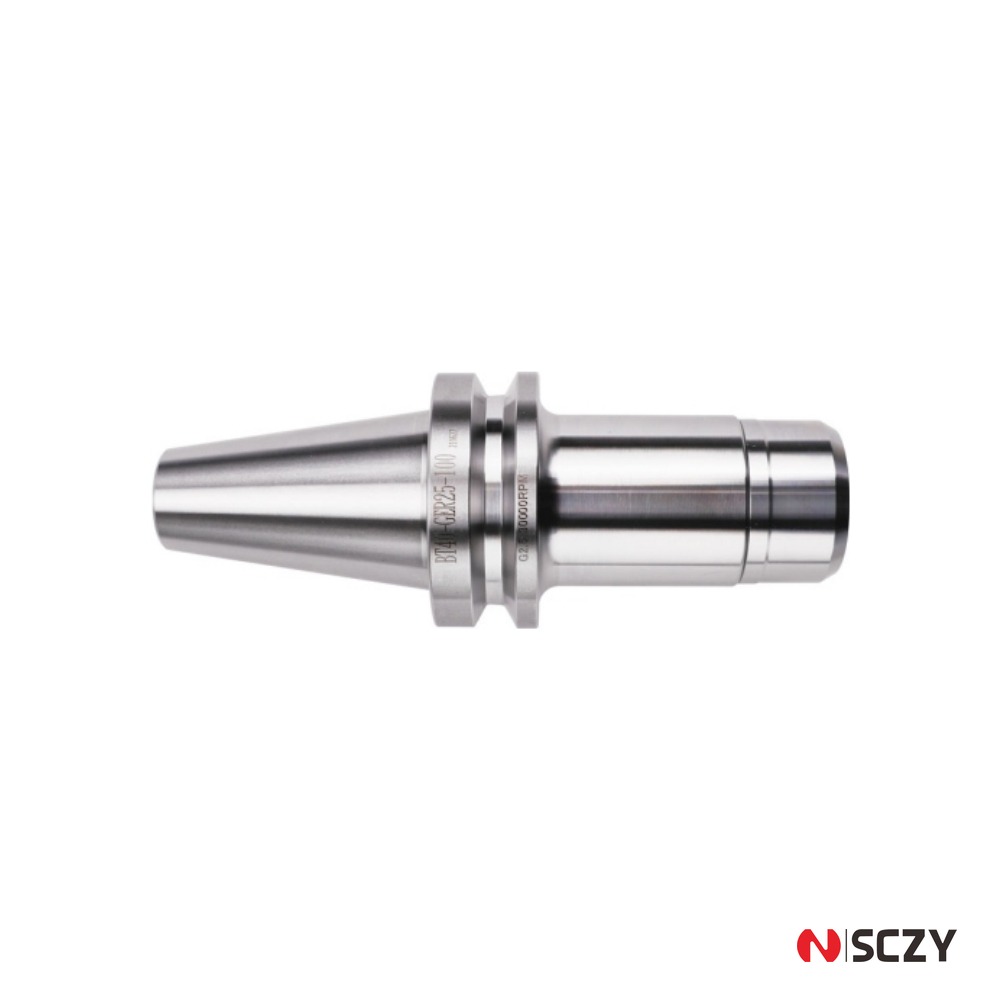
The same V-flange concept
Both use a flanged body with drive slots for the spindle keys and a flat reference face for the automatic tool changer gripper arm. To a casual glance — or a bad product photo — a CAT40 and a BT40 holder look the same from the side.
Similar accuracy grades
Taper tolerance grades (AT2/AT3), balance grades such as G2.5 at 25,000 rpm, and collet runout classes are specified the same way for both families. A precision BT40 ER collet chuck and a precision CAT40 ER collet chuck are built to the same accuracy philosophy; only the spindle-side interface changes.
The Flange Difference: Thicker on BT, Slimmer on CAT
The first visible difference is the flange. BT40 flanges are noticeably thicker than CAT40 flanges, which makes BT holders slightly longer overall and gives them a different gauge line relative to the spindle nose. That thickness shift also moves the position of the drive slots and the gripper reference edge, which is exactly why automatic tool changers care.
Practical consequences:
- Tool changer setup: ATC gripper arms and carousel pockets are calibrated to one flange standard. A holder of the wrong family can be picked but will sit at the wrong height in the spindle, or not be picked at all.
- Gauge length bookkeeping: because the flange thickness and gauge line differ, offsets programmed from a CAT40 holder do not transfer to a BT40 holder of the same stick-out. Presetting data must be kept per standard.
- Clearance in tight setups: the slimmer CAT40 flange buys a little more clearance around fixtures; the thicker BT flange trades that clearance for a stiffer, longer body.
The Pull Stud Difference: The Real Deal-Breaker
The most consequential difference hides at the back of the holder. The drawbar grips a pull stud (also called a retention knob), and that part is not shared between the two standards.
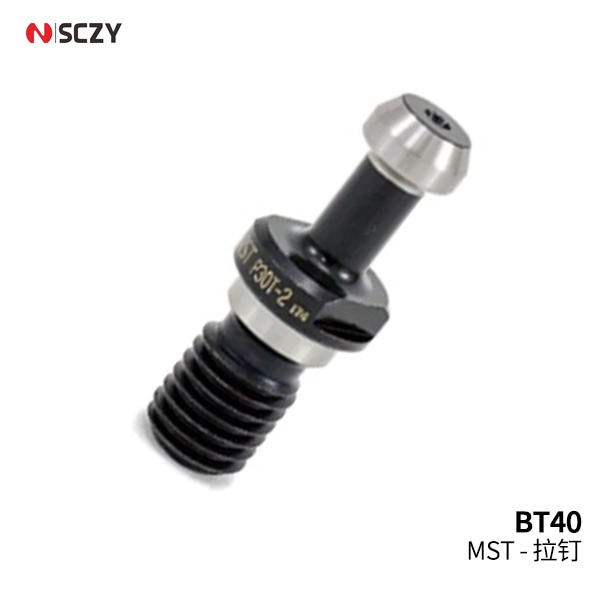
Different threads
BT40 pull studs carry an M16 × 2.0 metric thread. CAT40 retention knobs use a 7/16-14 UNC thread. The studs are physically not screwable into the wrong holder, but the greater danger is the stud head, not the thread.
Different head geometry
Drawbar fingers inside the spindle are machined to grip a specific head profile — the shoulder angle, head diameter and fillet radii of the stud. A CAT40 drawbar cannot reliably grip a BT40 stud head and vice versa. In the worst case the fingers slip, the holder is released mid-cut, and the tool and spindle nose take the damage. Never assume a “close enough” stud will work; every stud must match the spindle standard it was built for. For torque values and coolant-through stud options, see our dedicated pull stud guide.
One crib, two studs
If your shop runs both spindle types, physically separate the studs — different bins, different labels, and a reminder etched into the maintenance routine. Pull stud mix-ups are one of the most common and most expensive errors in mixed-fleet shops.
Through-Spindle Coolant: How the Standards Diverge
Classic CAT40 spindles deliver through-spindle coolant via a rotary union and a sealed retention knob; many North American shops treat high-pressure coolant as a CAT40-native feature. Traditional BT40 spindles were often specified for external coolant only, while modern BT and BBT (dual-contact) designs add sealed studs and center feed as options. The takeaway for buyers: coolant capability is a spindle-and-stud system decision, not something the holder alone provides. Always confirm spindle coolant specification and matching stud type before ordering coolant-through holders.
CAT40 vs BT40 at a Glance
| Feature | CAT40 | BT40 |
|---|---|---|
| Standard | ASME B5.50 | JIS B 6339 |
| Taper | 7/24, self-holding | 7/24, self-holding |
| Flange thickness | Slimmer flange, shorter body | Thicker flange, longer body |
| Pull stud thread | 7/16-14 UNC | M16 × 2.0 |
| Stud head geometry | CAT-specific drawbar profile | BT-specific drawbar profile |
| Through-spindle coolant | Common via sealed knob | Optional; standard on BBT dual-contact |
| Typical markets | North America | Japan, Taiwan, much of Asia |
| Interchangeable with the other | No | No |
Can You Put a BT40 Holder in a CAT40 Spindle?
This is the question buyers ask most, and the honest answer is no — and you should not try.
What actually happens
The 7/24 taper of a BT40 holder can slide into a CAT40 spindle bore, which is why people are tempted. But the drawbar fingers will not grip the BT stud head correctly, the flange thickness puts the holder at the wrong gauge position for the tool changer, and the drive slots may not even engage the spindle keys. The result ranges from immediate rejection at the tool change to a holder that seats on the taper but pulls loose under cutting load.
What about adapters?
BT-to-CAT adapter spindles and hybrid holders exist, but each added interface adds runout and removes rigidity. For production work, buy holders that match the spindle. If you must run one-off jobs across standards, treat the adapter as a temporary tool, check runout after assembly, and keep the cut light. Chronic taper and contact problems are worth diagnosing properly — our article on tool holder taper wear covers how to check what your spindle actually sees.
Which Standard Should You Buy?
The spindle decides, not the catalog. A few practical rules:
Match the machine builder’s home market
Japanese and most Taiwanese-built VMCs ship with BT40 spindles; North American-built machines ship CAT40. When importing machines from another region, verify the taper family before you bulk-order tooling — retrofitting a crib of holders is far more expensive than ordering correctly the first time.
For a mixed fleet, standardize the consumables, not the holders
You cannot standardize the holders across both spindles, but you can standardize everything else: collet series, nut torque procedures, balance grades, and inspection routines. That keeps training and QC consistent even when the flanges differ.
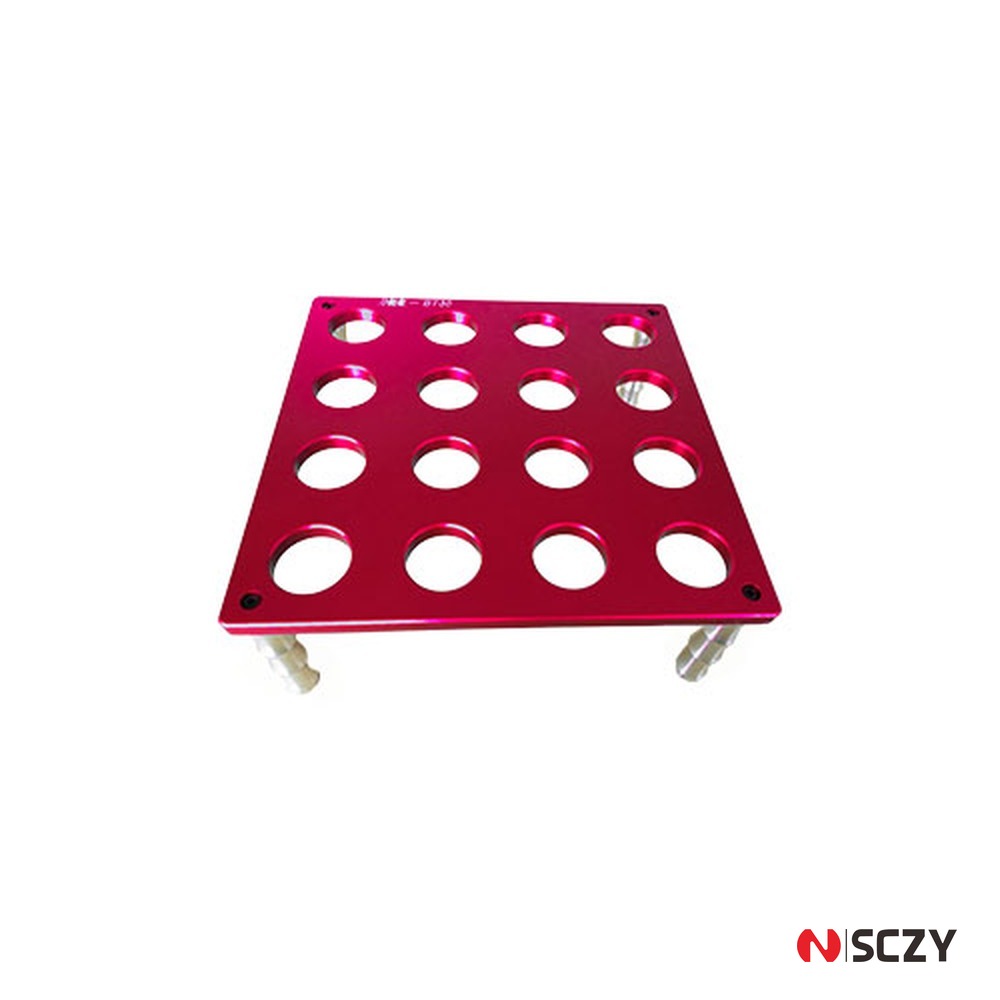
Label the crib by standard, not by size
In a mixed shop, organize storage racks by spindle standard first and holder size second. A rack labeled “40 taper” invites mix-ups; racks labeled “CAT40” and “BT40” prevent them. Pair the labels with dedicated pull stud bins and a simple check at the presetter: confirm the holder standard before it enters the spindle queue.
Buying Holders for Both Standards from One Supplier
Sourcing CAT40 and BT40 holders separately from different vendors multiplies quality variation, lead times and paperwork. A better setup is one supplier who holds both families to the same inspection standard.
What to check before the first order
- Taper contact: ask for AT taper grade and bluing contact evidence, not just “precision” claims.
- Runout spec: state the collet runout class you expect at a defined distance (for example, TIR at 4×D) and hold the supplier to it. Our ER collet runout guide explains the grades.
- Stud matching: order pull studs with the holders, from the same lot, and verify the head profile against your drawbar spec.
- Balance grade: confirm G2.5 at your operating rpm if you run above 12,000 rpm — see our notes on balance grades.
- Mixed-standard packaging: ask for CAT/BT marking on labels and cartons so receiving can sort without opening boxes.
Consistency beats heroics
Shops that get the best life from either standard are rarely chasing exotic designs. They match the holder to the spindle, keep studs segregated, clean the taper every change, and replace holders on a taper-wear schedule instead of waiting for scrap parts. Both CAT40 and BT40 reward exactly the same discipline.
Bottom Line
CAT40 and BT40 share the 7/24 taper that makes them look interchangeable, but flange thickness, pull stud design and tool changer geometry keep them apart. Match the holder family to the spindle, never share studs between standards, and buy both families from a supplier who can prove accuracy grades rather than just quote them.
SCZY supplies precision tool holders for CAT40, BT40, BBT and HSK spindles — ER collet chucks, side-lock end mill holders, milling chucks, shrink-fit and hydraulic holders, with matching pull studs and full inspection documentation. Browse our full range at sczymfg.com, and when you are ready to spec holders for a mixed crib or a new machine, send us your spindle standard and holder list — our engineers will recommend the right family, sizes and accuracy grades for your work.



