
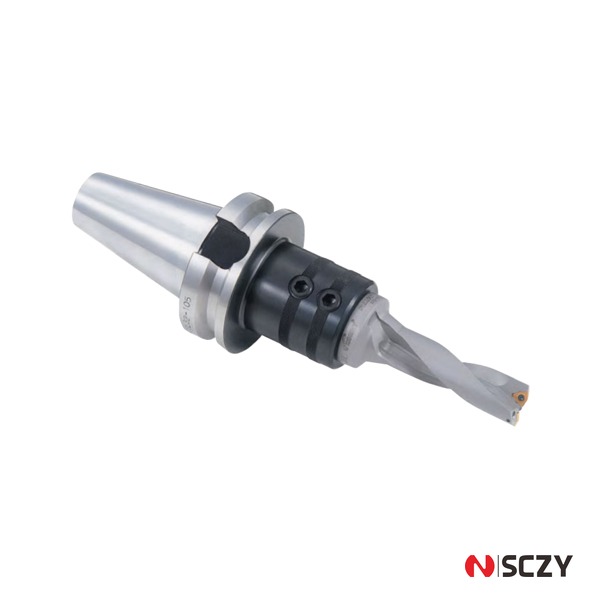
Walk through any die shop or heavy plate jobbing facility and you will find one holder type doing the ugliest work in the building: the side lock end mill holder. Also called a Weldon holder or set-screw holder, it grips the cutter through a small milled flat on the shank instead of relying purely on friction. That single design difference makes it the most pull-out-resistant holder in most tool cribs, and the reason it survives in the era of hydraulic and shrink-fit tooling. This guide explains how side lock holders work, how they compare against collet chucks and milling chucks, and which specs and torque values to check before you order.
What a Side Lock End Mill Holder Is (and Where It Fits)
A side lock end mill holder is a tapered holder — most commonly BT30, BT40 or CAT40, with HSK variants for high-speed spindles — with a precision-bored cylindrical bore that accepts a cutter shank ground with a Weldon flat. A hardened set screw enters from the side of the holder body and bears directly on that flat. When the screw is tightened, the cutter can no longer rotate in the bore, and the mechanical interlock between screw and flat also stops the tool from being pulled out by the cutting edge.
That makes the side lock holder the default choice for roughing end mills, long flute cutters, corn-cob roughers and big drills — tools that generate high torque and strong axial pull. In contrast, a friction-grip holder must translate all of that torque into clamping pressure on a round shank, and a chip jam or a dull corner can convert enough cutting force into spin-out. With a flat in the system, spin-out is physically blocked, not just resisted.
The Weldon Flat Does the Heavy Lifting
The Weldon flat itself is standardized. Under DIN 6535 HA, a 10 mm shank carries a flat milled to roughly 8.5 mm from the shank end, a 12 mm shank about 10.5 mm, and a 16 mm shank around 13.5 mm — always check the exact table for the shank size you run, because flat height and flat length both matter. The set screw seats against this flat, so the contact is metal-on-metal across a defined surface rather than a friction circle. Two practical consequences follow:
- Position is repeatable. Every time the cutter bottoms on the flat, its axial position relative to the holder is the same, which simplifies offset management between tool assemblies.
- Grip survives abuse. Interrupted cuts, work-hardened scale and heavy chip loads that would walk a round shank out of a collet simply load the set screw.
The trade-off is equally clear: the flat slightly reduces the effective gripping area of the shank, the set screw is a single point of contact that can mark the shank, and the cutter cannot be repositioned axially in fine increments the way it can in an ER system. You are trading adjustability for absolute retention.
Side Lock vs Collet Chuck vs Milling Chuck
Most shops run all three holder families side by side, and the decision usually comes down to the operation, not the brand. The table below summarizes where each system wins.
| Attribute | Side Lock (Weldon) Holder | ER Collet Chuck | High-Torque Milling Chuck |
|---|---|---|---|
| Retention principle | Set screw on Weldon flat (mechanical interlock) | Collet friction on round shank | Spring collet segments, high clamping force |
| Pull-out resistance | Excellent — physically blocked | Moderate — depends on torque and cleanliness | Very good on round shanks |
| Typical runout at nose | 0.01–0.02 mm | 0.003–0.01 mm with AA-grade collets | 0.005–0.015 mm |
| Axial adjustability | Fixed by flat position | Continuous, infinite | Continuous |
| Cutter shank needed | Weldon flat (DIN 6535 HA) | Plain cylindrical (h6) | Plain cylindrical |
| Best applications | Roughing, heavy drilling, interrupted cuts | Finishing, drilling, small tools, mixed tool cribs | High-torque milling with solid carbide cutters |
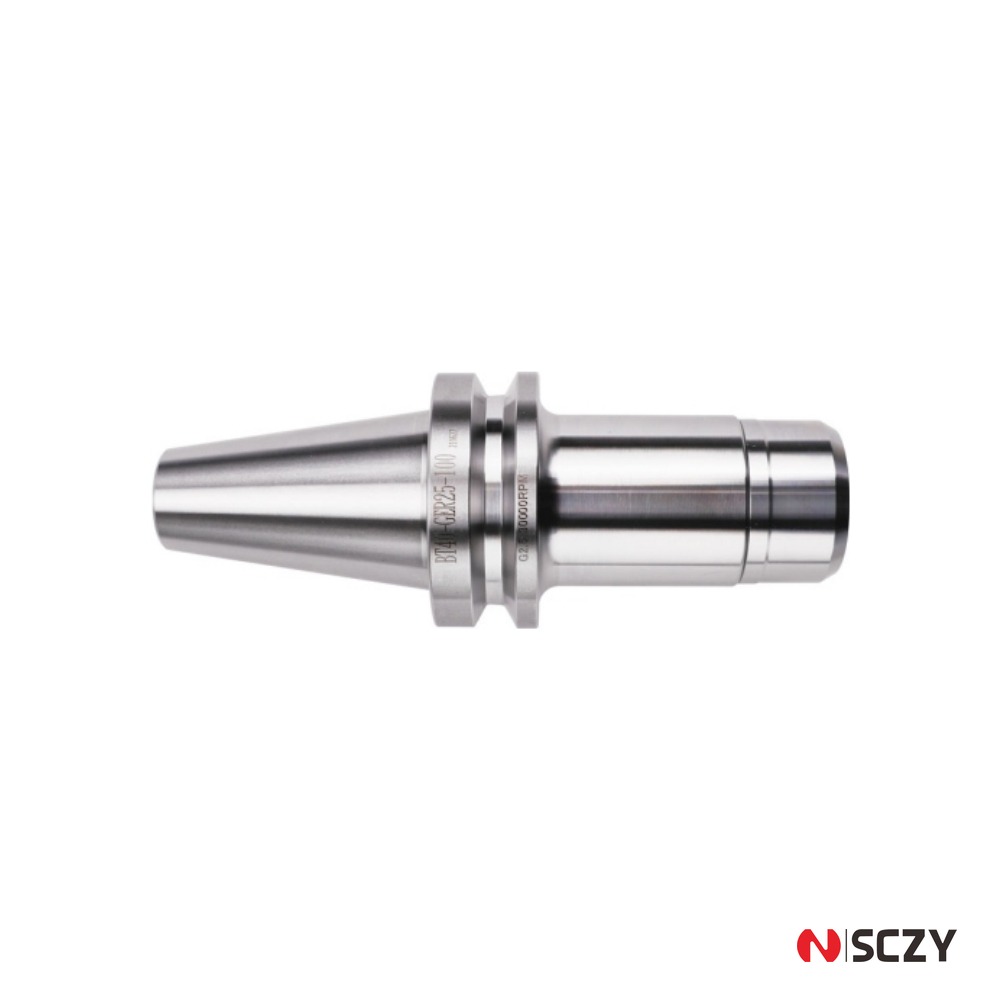
For a deeper look at collet accuracy, see our breakdown of ER collet runout and accuracy grades — the short version is that a good ER system beats a side lock holder on runout, which is why finishing stays in collets.
Where the Side Lock Holder Wins
Reach for a side lock end mill holder when the risk of a pulled tool costs more than a few microns of runout: roughing welded or flame-cut edges, slotting deep pockets in mold steel, drilling 25 mm-plus holes with twist drills, and any job where a stalled cutter scraps a semi-finished part worth more than the holder. High-performance variants such as the BIG BBT40-SSL add through-coolant and stronger screw seating for exactly these duty cycles.
Where a Collet Chuck Is Still the Better Call
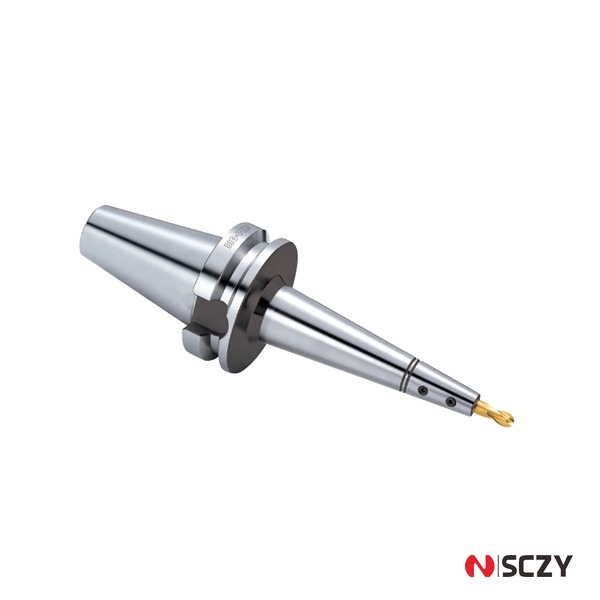
Keep side lock holders away from finishing work and small tools. Below roughly 10 mm diameter, the flat consumes too much of the shank, the set screw is easy to over-torque, and the runout budget of a collet chuck pays for itself in tool life. Mixed-diameter drilling and reaming jobs also favor ER chucks, since one chuck covers a wide clamping range — our BT40 tool holder types guide maps out these trade-offs in more detail.
Specs to Check Before You Order
Weldon Flat Dimensions and Tolerance
Confirm that the cutter shank actually matches the holder bore. Most side lock holders accept DIN 6535 HA shanks, but US-market cutters sometimes follow slightly different flat conventions, and mixing standards leaves the screw sitting on the flat’s edge — the fastest way to gall a shank. If your holders and cutters come from different suppliers, check flat height, flat length and distance from the shank end on both datasheets.
Taper, Projection and Coolant
The holder taper should be checked the same way as any other tooling: blue the taper against a gauge or the spindle, and inspect for wear if the holder has been in service for years — our taper wear checklist covers the procedure. Also decide on projection: side lock holders come in short and long nose versions, and extra projection multiplies leverage on both the spindle gage line and the set screw. For through-tool coolant, specify a coolant-through holder matched to the cutter’s internal channels, and verify the sealing method rather than assuming compatibility.
Set Screw Torque and Installation Practice
The set screw is a precision component, not a grub screw you snug up with a feel for it. Follow the holder manufacturer’s torque chart; as a sense of scale, mid-size holders with M8-class screws commonly call for somewhere in the 25–40 Nm range, while larger screws can exceed that. Under-torquing lets the cutter hammer the flat and loosen the screw; over-torquing deforms the bore and can crack older bodies. Three habits keep side lock assemblies reliable:
- Clean the bore and flat. A chip under the screw or flat costs you the retention advantage that justified the holder in the first place.
- Use the right hex key and a torque wrench for production-critical assemblies, and check the screw’s thread for wear during holder service.
- Apply a small amount of anti-seize or thread oil per the maker’s spec so the torque value you set is the clamping force you get.
When to Step Up to a High-Torque Milling Chuck
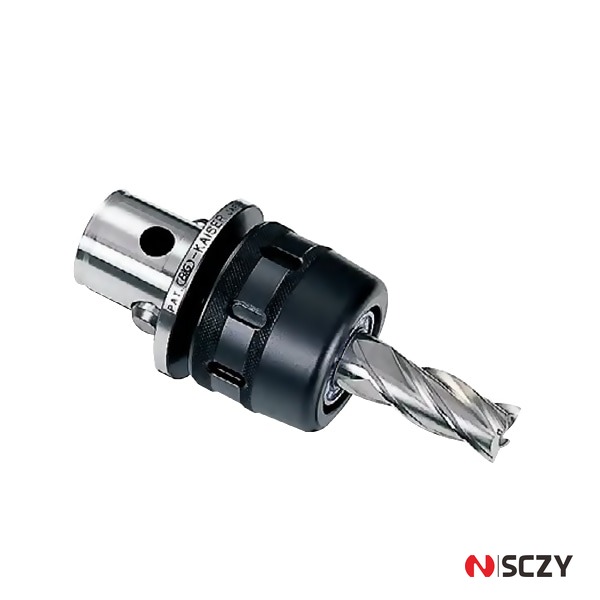
Between collets and side lock sits a third option worth knowing: the high-torque milling chuck. Its spring-segment collet delivers far more clamping force than an ER nut on a plain round shank, so cutters without a Weldon flat can still be run hard. If your tool inventory is already plain-shank, adding side lock holders means re-grinding flats or buying new cutters — a milling chuck may bridge the gap more cheaply.
Common Failures and How to Avoid Them
Tool Pull-Out
Genuine pull-out in a correctly torqued side lock assembly usually means the flat was never engaged: the screw bottomed in a worn or over-tapped thread, the flat dimensions did not match the holder, or the cutter was not fully seated against the flat. If you chase recurring pull-out on one spindle, also verify drawbar force — a weak drawbar shifts retention duty onto the set screw alone, and no holder survives that for long. Our pull stud guide explains how retention force degradation shows up in daily cutting.
Runout You Didn’t Budget For
Side lock holders typically deliver 0.01–0.02 mm at the nose, but chips in the bore, a burr on the Weldon flat, or a screw tightened unevenly can push that much higher. If surface finish suddenly degrades on a roughing job, measure runout at the flute before blaming the cutter.
Quick Buying Checklist
- Match taper (BT40/CAT40/HSK) to your spindle, and confirm through-coolant requirement up front.
- Confirm cutter shanks are DIN 6535 HA or equivalent before mixing brands.
- Pick short projection where possible; order long-nose versions only when the part demands reach.
- Ask for the set screw torque chart with the quotation and keep it at the machine.
- For mixed cribs, weigh one or two high-torque milling chucks against a fleet of side lock holders.
Need side lock end mill holders, ER collet chucks or high-torque milling chucks quoted against your cutter list? Send us your tooling requirements — SCZY supplies precision tool holders and workholding with flexible order quantities and supports selection checks before you commit.



